Forex Brokerage Business : Setup Guide
Introduction
The foreign exchange (forex) market stands as the largest and most liquid financial market globally, with daily trading volumes exceeding $7.5 trillion according to the Bank for International Settlements' 2022 triennial survey. For entrepreneurs eyeing this lucrative sector, setting up a forex broker offers immense potential for revenue generation through commissions, spreads, and value-added services. However, launching a forex brokerage is not a simple endeavor; it demands meticulous planning, substantial capital, and adherence to stringent regulations to build trust and sustainability.
Why does forex broker setup matter? In an era where retail trading has surged—fueled by accessible online platforms and mobile apps—reputable brokers are pivotal in providing secure, efficient trading environments. Aspiring brokers must navigate complex legal landscapes, integrate cutting-edge technology, and develop robust operational frameworks to compete with established players like IG Group or OANDA. Failure to address these elements can lead to regulatory penalties, operational failures, or loss of client confidence, underscoring the need for a strategic approach.
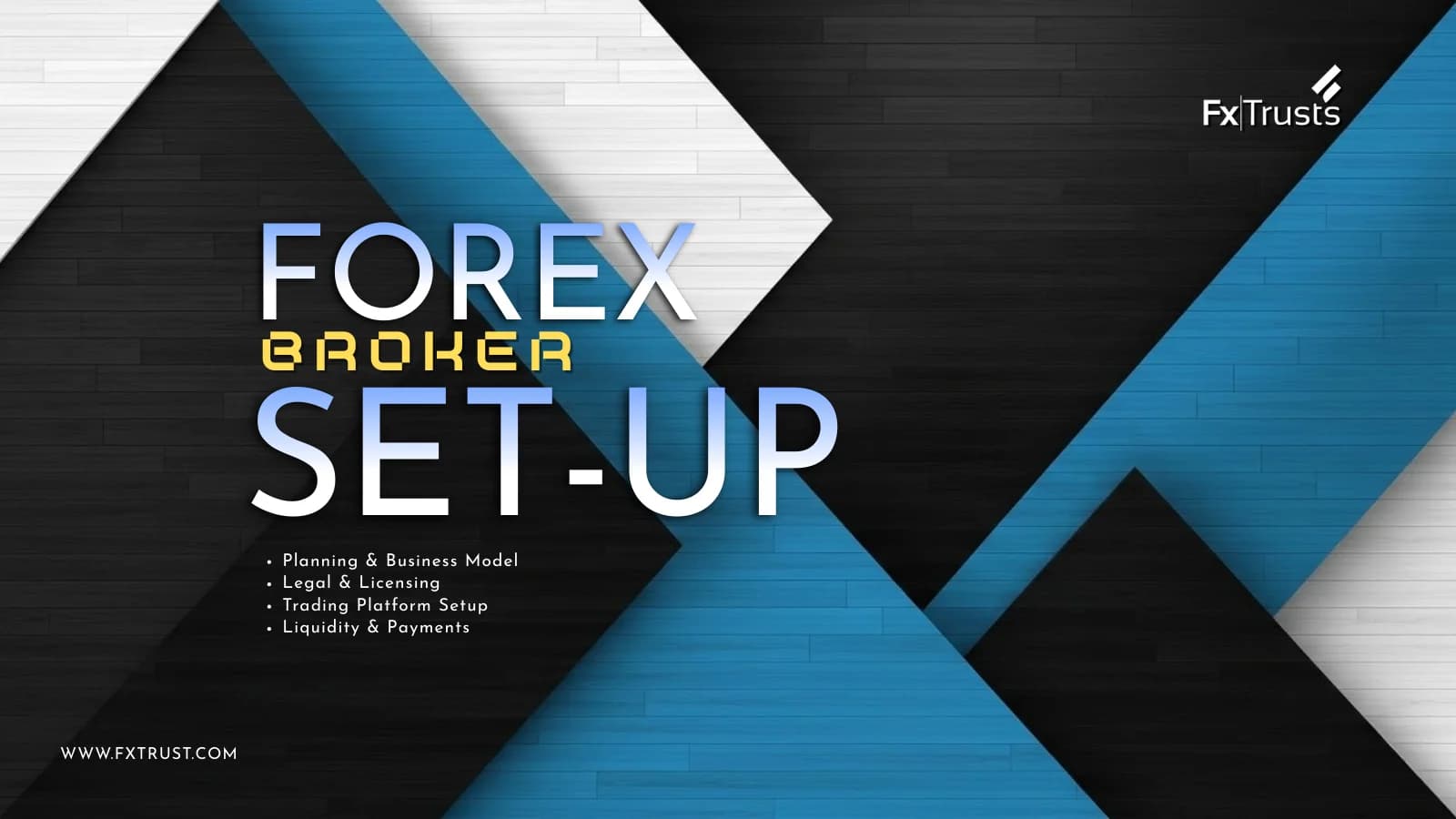
This comprehensive guide demystifies the process of establishing a forex broker. We begin by exploring legal and regulatory requirements, essential for legitimacy and protection. Next, we delve into technical infrastructure, including platform selection and integration. Then, we cover operational aspects such as staffing, marketing, and risk management. Finally, we'll conclude with actionable insights to propel your venture forward. By the end, you'll have a clear roadmap to transform your vision into a thriving brokerage, equipped with practical advice and real-world examples to mitigate common pitfalls.
Consider the case of a startup in Cyprus that secured an EU license through CySEC and scaled to over 10,000 clients within three years by prioritizing compliance and user-friendly tech. Such success stories highlight that while challenges abound, a well-executed setup can yield significant returns. Whether you're a fintech innovator or a seasoned trader, understanding these steps ensures your forex broker not only launches successfully but also adapts to evolving market dynamics like algorithmic trading and cryptocurrency integrations.
Legal and Regulatory Requirements for Starting a Forex Broker
Establishing a forex broker begins with navigating the intricate web of legal and regulatory frameworks, which vary by jurisdiction but universally aim to protect investors and maintain market integrity. In the European Union, for instance, brokers must obtain a license from bodies like the Cyprus Securities and Exchange Commission (CySEC) or the Financial Conduct Authority (FCA) in the UK. These regulators enforce capital adequacy rules, such as maintaining a minimum net capital of €730,000 under MiFID II directives, to ensure solvency during volatile periods.
Why is compliance non-negotiable? Non-adherence can result in hefty fines—exceeding millions of euros—or outright business shutdowns, as seen in the 2018 case of a U.S.-based broker fined $1.2 million by the CFTC for unregistered operations. To start, conduct a thorough jurisdiction analysis: offshore options like the Seychelles FSA offer lighter regulations and lower costs (around $50,000 in setup fees), ideal for beginners, while onshore hubs like Australia’s ASIC provide credibility but demand higher barriers, including $1 million in capital.
Step-by-step guidance includes: First, form a legal entity, typically a limited company, and register it in your chosen jurisdiction. Second, prepare documentation such as business plans, risk assessments, and AML (Anti-Money Laundering) policies. Third, submit applications, which can take 6-12 months and cost $100,000-$500,000 depending on the regulator. Engage legal experts early; for example, firms specializing in forex compliance can streamline this, reducing rejection risks by 40% based on industry reports.
Common concerns include ongoing reporting obligations, like quarterly financial audits, and adapting to global standards such as FATF recommendations against terror financing. From multiple perspectives, regulators view brokers as gatekeepers, while traders prioritize licensed entities for fund segregation—ensuring client deposits are ring-fenced from operational funds. Practical tip: Start with a white-label solution in a regulated jurisdiction to test waters before full independence, minimizing initial legal exposure.
Real-world application: A Dubai-based broker leveraged DMCC free zone benefits to secure a license swiftly, integrating Sharia-compliant features to tap Islamic finance markets, boosting client acquisition by 25%. Thorough regulatory setup not only averts legal pitfalls but also enhances your brokerage's reputation, attracting institutional partners and high-net-worth individuals.
Technical Infrastructure and Platform Selection
Once regulatory hurdles are cleared, building a robust technical infrastructure becomes paramount for a forex broker's functionality and user experience. At the core is selecting a trading platform, with MetaTrader 4 (MT4) and MetaTrader 5 (MT5) dominating 70% of the market per a 2023 Finance Magnates report, due to their customizable EAs (Expert Advisors) and multi-asset support. Alternatives like cTrader offer advanced charting and faster execution, appealing to algorithmic traders.
Integration involves more than software; it requires scalable servers, liquidity providers, and secure data centers. For instance, partnering with Tier-1 banks like JPMorgan ensures deep liquidity pools, reducing slippage during high-volatility events like NFP releases. Budget for this: Initial setup can range from $200,000 for cloud-based solutions (e.g., AWS) to $1 million for proprietary systems, with ongoing costs for bandwidth and cybersecurity at 10-15% annually.
Step-by-step process: Begin with needs assessment—define features like mobile responsiveness and API integrations for third-party tools. Next, choose a provider; white-label options from companies like TradeTools FX allow quick deployment in 3-6 months at $50,000 upfront. Then, implement security measures: SSL encryption, two-factor authentication, and DDoS protection are essential, as cyber threats cost the forex industry $5.7 billion in 2022 per Cybersecurity Ventures.
Address concerns like downtime: Use redundant systems and conduct stress tests simulating 10,000 concurrent users. From a developer's perspective, open-source platforms offer flexibility but demand in-house expertise; conversely, proprietary ones like Spotware's cTrader provide plug-and-play ease. Practical advice: Incorporate AI-driven analytics for personalized trading dashboards, enhancing retention—studies show 30% higher engagement with intuitive UIs.
Example: A new broker in Malta integrated MT5 with blockchain for transparent settlements, reducing disputes by 50% and attracting crypto-forex hybrid traders. This technical backbone not only ensures seamless operations but also positions your brokerage as innovative, capable of handling diverse instruments from majors like EUR/USD to exotics like USD/TRY.
Operational Setup: Staffing, Marketing, and Risk Management
With legal and technical foundations in place, operational setup focuses on human resources, client acquisition, and safeguarding against financial risks—key to long-term viability. Staffing requires a mix of experts: compliance officers, IT specialists, customer support, and traders. Aim for 20-50 initial hires; salaries can total $1-2 million yearly, with roles like a chief risk officer earning $150,000+ to oversee exposures.
Marketing strategies must comply with regulations like ESMA's leverage caps (30:1 for majors), emphasizing educational content over aggressive promises. Digital channels dominate: SEO-optimized websites, social media, and affiliate programs drive 60% of leads, per a 2023 eMarketer study. Budget 15-20% of revenue here; for example, PPC campaigns on Google targeting 'best forex broker' can yield 5:1 ROI if geo-targeted effectively.
Risk management is critical: Implement tools like stop-out levels at 20% margin and hedging via multiple liquidity providers to mitigate volatility. Step-by-step: Develop policies for position limits and stress testing; use software like RiskWatch for real-time monitoring. Common questions include handling negative balance protection—mandatory in EU, it shields clients from losses beyond deposits, building loyalty.
Multiple perspectives: From an operational viewpoint, efficient staffing via outsourcing (e.g., support to the Philippines) cuts costs by 40%; marketers stress content like webinars on 'forex basics' to nurture leads. Case study: A Singapore broker hired a diverse team and launched influencer partnerships, growing to 5,000 clients in year one while maintaining a 99% uptime through proactive risk protocols.
Practical tips: Conduct regular training on KYC/AML to avoid fines, and use CRM systems like Salesforce for personalized marketing. Integrate ESG factors for sustainable appeal. This holistic operational framework ensures your forex broker operates efficiently, scales with demand, and weathers market storms like the 2020 COVID volatility.
Conclusion
Setting up a forex broker is a multifaceted journey that intertwines regulatory diligence, technological prowess, and operational excellence to create a resilient business in the dynamic forex arena. We've explored the foundational legal requirements, from securing licenses in jurisdictions like CySEC to ensuring AML compliance, which form the bedrock of trust and legality. Technical infrastructure, highlighted by platforms like MT4/MT5 and secure integrations, enables seamless trading experiences that retain clients amid fierce competition.
Operational elements—staffing skilled teams, deploying targeted marketing, and fortifying risk management—drive growth and stability. Real-world examples, such as the Cyprus startup's rapid scaling or the Malta broker's blockchain innovation, illustrate how strategic execution can overcome initial hurdles. Addressing concerns like capital needs (often $500,000-$2 million total) and adaptation to trends like AI trading underscores the importance of thorough planning from multiple angles, balancing innovation with prudence.
Key takeaways include: Prioritize jurisdiction selection for cost-benefit alignment; invest in scalable tech to future-proof operations; build a compliant culture through ongoing training; and leverage data analytics for marketing ROI. Common pitfalls, like underestimating liquidity partnerships or ignoring client education, can be avoided by following step-by-step guides and seeking expert consultations early.
As you embark on this path, remember that success in forex brokering hinges on delivering value—transparent pricing, reliable execution, and superior support. With the market projected to hit $8 trillion daily by 2025 (BIS forecast), now is prime time for entry. Take action today: Assess your resources, consult regulatory advisors, and draft a detailed business plan. Your forex broker could soon be empowering traders worldwide—start the setup process and position yourself at the forefront of global finance.
Frequently Asked Questions
What is the average cost to set up a forex broker?
Costs typically range from $500,000 to $2 million, covering licensing ($100,000+), technology ($200,000+), and operations. Offshore setups are cheaper but less credible.
How long does it take to get a forex broker license?
Expect 6-12 months, depending on jurisdiction. EU regulators like FCA are rigorous, while places like Vanuatu can approve in 3 months.
Do I need programming skills for technical setup?
No, white-label platforms handle this. However, basic IT knowledge aids customization; outsource development if needed.
What are the biggest risks in running a forex broker?
Regulatory non-compliance, market volatility, and cyber threats. Mitigate with strong policies, diversification, and insurance.
Can a small team launch a successful forex broker?
Yes, starting with 10-20 people via outsourcing. Focus on niche markets like mobile trading for quick growth.