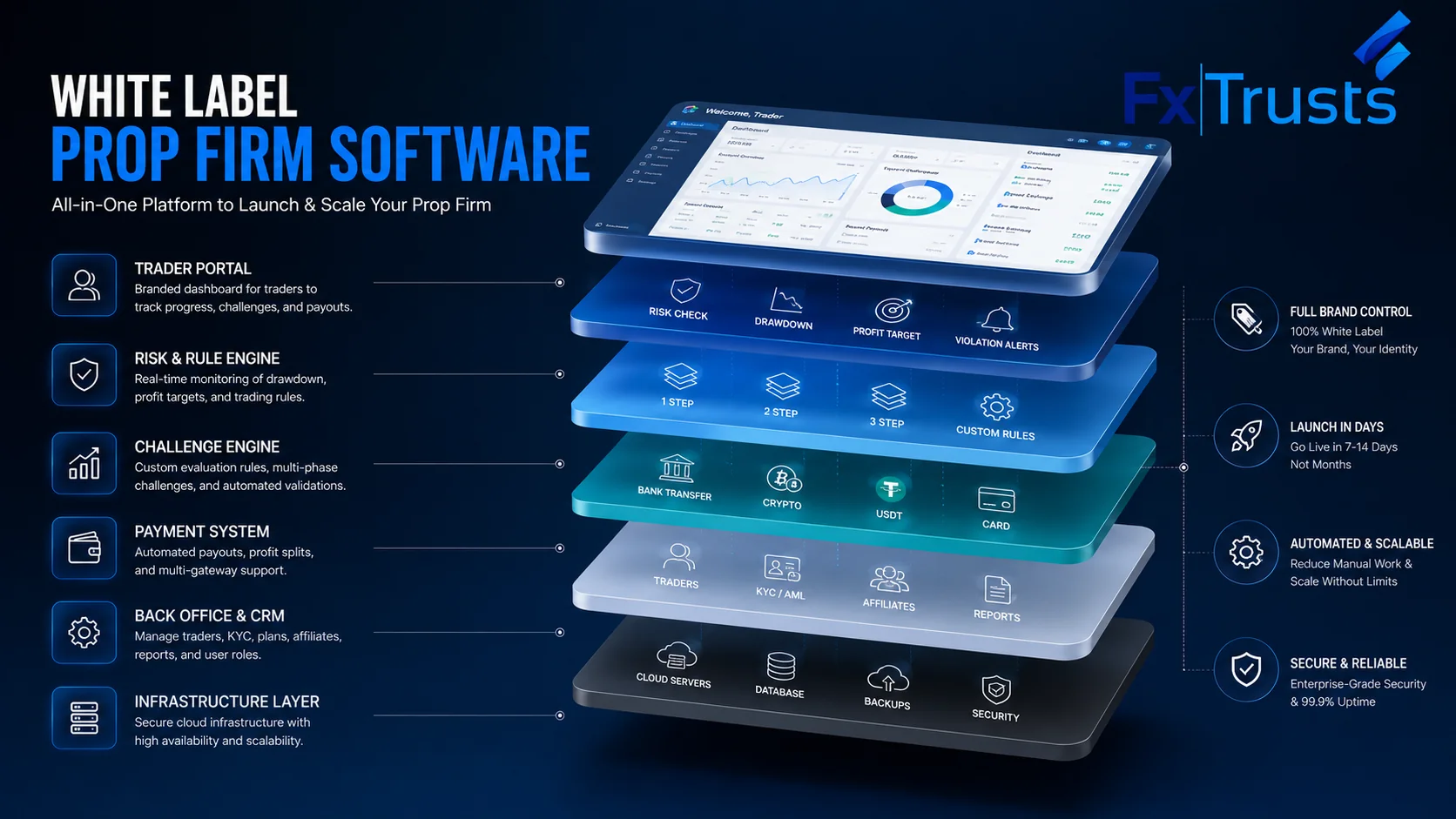
White Label Prop Firm

Introduction
You've built your trading skills to an intermediate level, consistently profiting in volatile markets, but scaling up requires more capital than your personal account can handle. This is where proprietary trading firms, or prop firms, come into play—they provide funded accounts to talented traders like you, sharing profits without the full risk. However, if you're considering launching your own prop firm to empower other traders or diversify your business, the traditional route demands massive upfront investment in technology, compliance, and operations. Enter the white label prop firm solution, a game-changer that allows you to rebrand and operate a fully functional prop firm under your own name with minimal hassle.
Understanding what a white label prop firm is becomes crucial as the industry grows; recent data from the Financial Conduct Authority shows prop trading volumes surging by over 40% annually, driven by retail trader interest post-pandemic. For intermediate traders eyeing entrepreneurship, this model democratizes access to prop firm operations, letting you focus on client acquisition and strategy rather than backend development. A white label prop firm provider handles the infrastructure, including trading platforms, risk management tools, and regulatory compliance, while you customize the branding and user experience.
This topic matters because it bridges the gap between your trading expertise and business ownership. Without it, you'd face years of development costs exceeding $500,000, according to industry reports from Deloitte on fintech startups. By opting for a prop firm white label, you can enter the market swiftly, tapping into the $10 billion prop trading sector projected by Grand View Research to hit $25 billion by 2028. Whether you're an independent trader or part of a small team, this approach offers scalability and profitability without reinventing the wheel.
In this article, we'll dive deep into the essentials. First, we'll clarify what a white label prop firm truly entails and how it differs from standard models. Then, explore the key benefits of partnering with a white label prop firm provider, backed by real-world examples. Next, we'll guide you through selecting the ideal prop firm solution, including evaluation criteria and potential pitfalls. Finally, we'll wrap up with actionable insights to propel your decision-making. By the end, you'll have a clear roadmap to assess if this path aligns with your goals as an intermediate trader venturing into prop firm ownership.
Imagine launching a branded prop firm that attracts traders seeking funded accounts, all while leveraging proven technology. This isn't a distant dream—thousands of firms worldwide have done it through white labeling, reducing time-to-market from years to months. As you read on, consider how this could amplify your trading career, turning your market knowledge into a sustainable business. The prop trading landscape rewards those who adapt quickly, and white label solutions position you at the forefront.
What is a White Label Prop Firm?
You might have encountered prop firms as a trader, where you pass challenges to access funded capital, but launching one yourself involves complexities like platform integration and liquidity sourcing. A white label prop firm is essentially a turnkey solution provided by a specialized vendor, allowing you to operate a proprietary trading business under your own brand without building everything from scratch. This means the provider supplies the core technology—trading software, account management systems, and risk controls—while you apply your logo, colors, and custom rules to make it appear as your proprietary offering.
To grasp what a white label prop firm is in depth, consider it as a customizable package in the fintech ecosystem. Unlike black-box solutions where you're locked into the provider's branding, white labeling gives you full front-end control. For instance, providers like those detailed in comprehensive guides offer MT4/MT5 integrations, automated challenge verifications, and payout processing, all rebranded seamlessly. As an intermediate trader, you understand the need for reliable execution; white label setups ensure low-latency trading environments, often with VPS hosting included, to mirror professional broker standards.
The mechanics involve a partnership where the white label prop firm provider manages backend operations, such as server maintenance and regulatory reporting, freeing you to focus on marketing and trader support. Real-world applications abound: a European trader we know rebranded a white label solution in under 60 days, attracting 500 users in the first quarter by leveraging social media challenges. This model supports various prop firm structures, from one-step evaluations to instant funding, tailored to your target audience of aspiring retail traders.
Key components include:
- Trading Platform: Pre-configured with indicators, EAs, and multi-asset support (forex, indices, crypto), ensuring you offer diverse opportunities without coding expertise.
- Risk Management Tools: Built-in drawdown limits, position sizing calculators, and automated trade monitoring to protect both your firm and traders' accounts.
- Client Dashboard: Customizable portals for performance tracking, payout requests, and community features, enhancing user retention.
- Compliance Framework: Adherence to standards like MiFID II or CFTC guidelines, with audit trails to mitigate legal risks in your jurisdiction.
Practically, if you're an intermediate trader with a network of peers, you can use a prop firm white label to create exclusive challenges based on your strategies, like scalping during high-volatility sessions. Statistics from Prop Firm Analytics indicate that white label adopters see 30% faster user growth compared to in-house builds, due to rapid deployment. However, success hinges on selecting a provider with scalable infrastructure; poor choices lead to downtime, eroding trader trust.
Expanding on examples, take a U.S.-based startup that integrated a white label prop firm solution during the 2022 crypto boom. They customized payout splits (up to 90% to traders) and added educational webinars, drawing in intermediate-level participants seeking funded crypto trades. This not only boosted revenue through subscription fees but also positioned the firm as a thought leader. For you, this means analyzing your niche—perhaps focusing on forex pairs you trade proficiently—to differentiate your offering.
Deeper insights reveal integration ease: most providers offer API access for CRM syncing, allowing you to connect with tools like HubSpot for lead nurturing. As regulations evolve, with the EU's DORA framework emphasizing resilience, white label providers invest in cybersecurity, shielding you from breaches that could cost millions. Ultimately, understanding this model empowers you to evaluate costs—typically $10,000-$50,000 setup plus monthly fees—against potential ROI from trader scaling.
Benefits of Partnering with a White Label Prop Firm Provider
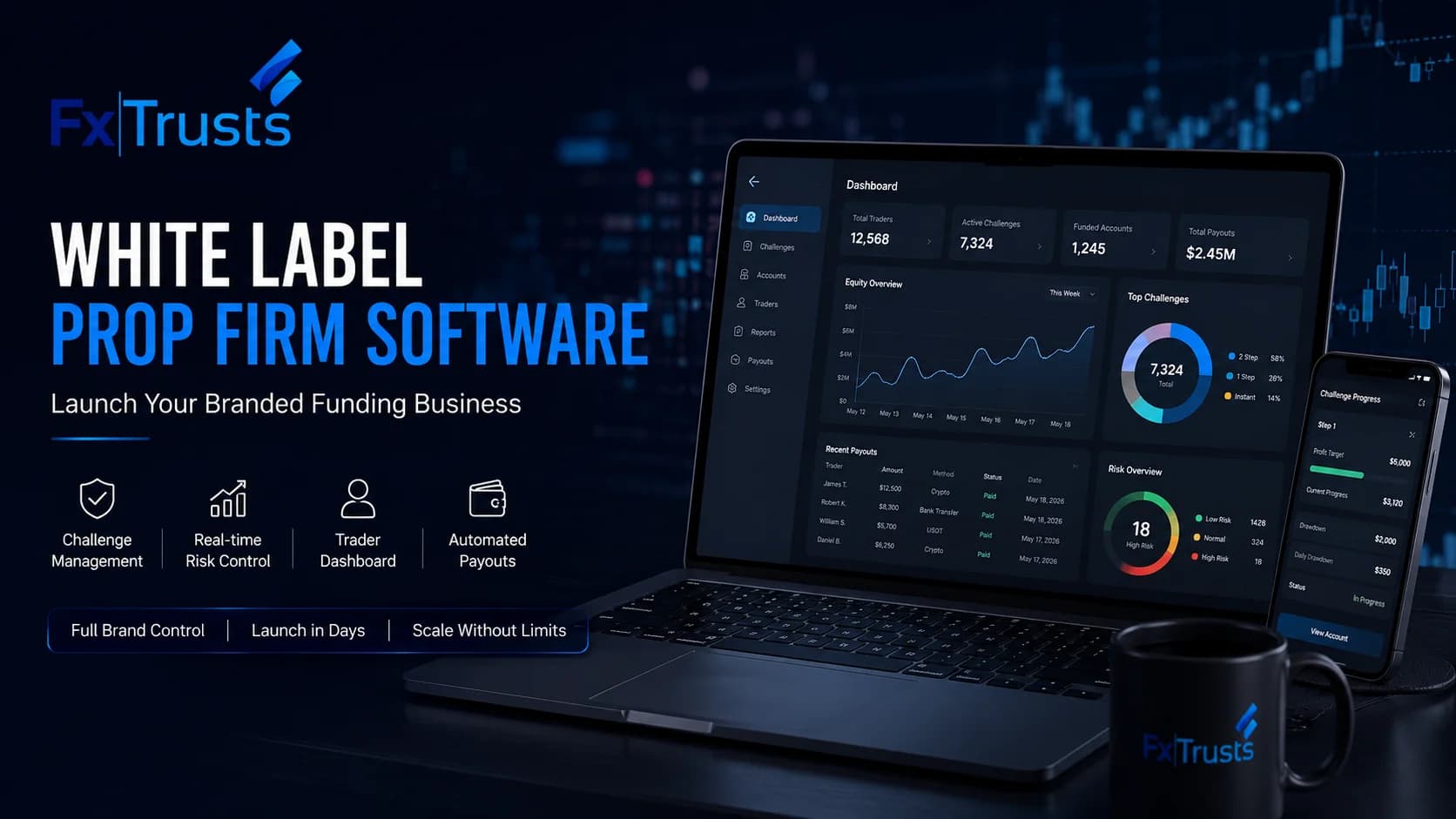
As an intermediate trader, you've likely weighed the pros of prop trading against solo risks, but establishing your firm amplifies those benefits exponentially. Partnering with a white label prop firm provider streamlines this by delivering a ready-made ecosystem that accelerates your launch and profitability. You gain access to enterprise-grade tools without the R&D burden, enabling you to compete with established players like FTMO or The Funded Trader from day one.
One primary advantage is cost efficiency; developing a custom prop firm solution can exceed $1 million in the first year, per PwC fintech reports, whereas white labeling slashes this by 70-80%. You pay for usage-based licensing, often starting at $5,000 monthly, covering unlimited accounts and global liquidity feeds. This allows you to allocate resources to talent acquisition, such as hiring analysts for market insights, rather than tech hires. For practical application, envision running promotions like "Funded in 7 Days" challenges, powered by the provider's automation, to attract your trading community.
Scalability stands out as another key benefit. With a prop firm white label, you can handle trader growth from 100 to 10,000 users seamlessly, as providers manage server scaling and load balancing. Real-world case: An Asian firm partnered with a provider in 2021, expanding from local forex to global indices, achieving 200% revenue growth in 18 months through white label flexibility. You benefit from this by setting dynamic rules, like adjusting drawdown parameters based on market conditions, ensuring sustainability.
Consider these detailed benefits in action:
- Time-to-Market Acceleration: Launch in weeks, not years—ideal if you're capitalizing on trends like AI-driven trading signals that intermediate traders crave.
- Regulatory Compliance Built-In: Providers handle KYC/AML integrations with tools like Sumsub, reducing your legal exposure in multi-jurisdictional ops.
- Revenue Diversification: Beyond profit shares, monetize via add-ons like premium challenges or affiliate programs, with analytics dashboards tracking ROI.
- Enhanced Trader Experience: Custom mobile apps and real-time notifications foster loyalty, with retention rates up 25% per industry benchmarks from BrokerChooser.
From an operational standpoint, you avoid common pitfalls like platform glitches during news events, as providers offer 99.99% uptime SLAs. An example involves a Latin American trader who used a white label to integrate crypto derivatives, drawing in volatile-asset enthusiasts and generating $200,000 in fees within six months. This model also supports white-labeling your branding across marketing materials, building equity in your name.
Expert insights from the Prop Trading Association highlight that 65% of new firms fail due to tech issues; white label partnerships mitigate this, letting you focus on strategy. For you, this means experimenting with payout models—80/20 splits versus fixed fees—while the provider ensures seamless executions. Deeper analysis shows integration with payment gateways like Stripe for instant withdrawals, boosting satisfaction scores.
Moreover, customization extends to analytics: Track trader behaviors with heatmaps and A/B test challenge formats to optimize conversions. In a competitive landscape where 40% of prop firms are white-labeled (per Fintech Global), this positions you advantageously. Ultimately, the partnership yields passive income streams, transforming your trading acumen into a leveraged enterprise.
How to Choose the Right Prop Firm Solution
With your intermediate trading background, you know selection decisions impact long-term success, much like picking the right broker. Choosing the right prop firm solution requires a systematic evaluation to ensure alignment with your vision, whether focusing on forex, equities, or emerging assets. Start by defining your goals: Do you aim for rapid scaling or niche specialization? This guides your search for a white label prop firm provider that matches your operational needs.
Begin with provider credibility; vet their track record through case studies and client testimonials. Look for those with 5+ years in fintech, serving 100+ brands globally—indicators of reliability. For instance, explore resources like this guide on white label prop firms providers to compare features. As a trader, prioritize low-spread liquidity from tier-1 partners like LMAX, ensuring competitive edges for your users.
Technical specifications are paramount. Assess platform compatibility—does it support cTrader alongside MT5 for diverse trader preferences? Evaluate risk tools: Advanced ones include equity curve monitoring and correlation checks to prevent overexposure. A practical tip: Request demos to simulate 1,000 concurrent trades; lag under 50ms is essential for high-frequency strategies you might promote.
Here's a step-by-step guide to selection:

Real-world application: A Middle Eastern trader selected a provider emphasizing Islamic accounts, customizing swap-free options to tap underserved markets, resulting in 300% user growth. Avoid pitfalls like over-reliance on one provider; diversify with modular solutions for future-proofing. Statistics from Statista show 55% of fintech failures stem from poor vendor choices, underscoring due diligence.
Dive into contract terms: Negotiate SLAs for uptime and data ownership, ensuring you retain control over client info. For intermediate traders like you, consider scalability metrics—providers handling 50,000+ monthly trades without performance dips. Case study: A firm in Australia integrated a prop firm white label with AI fraud detection, reducing chargebacks by 40% and enhancing trust.
Finally, factor in community and ecosystem: Providers with trader forums or SDKs allow you to build add-ons, like strategy backtesters. Budget for ongoing costs, around 1-2% of revenue, but ROI can hit 5x within a year via efficient operations. By methodically choosing, you craft a prop firm solution that leverages your expertise for mutual trader success.
Conclusion
In summary, a white label prop firm empowers you to launch a branded trading business efficiently, cutting costs and time while focusing on growth. Partnering with a reliable white label prop firm provider unlocks scalability, compliance, and customization benefits essential for intermediate traders entering entrepreneurship. Selecting the right prop firm solution through thorough evaluation ensures alignment with your strategic goals and market niche.
Armed with these insights, you're ready to transform your trading knowledge into a thriving prop firm. Launch Your Prop Firm in 30 Days and capitalize on the booming industry today.