Best Forex CRM Software | Complete Guide for Brokers in 2026

Forex brokers face mounting pressure to handle growing client volumes while maintaining strict compliance and operational efficiency. Many struggle with fragmented systems that lead to delayed onboarding, manual errors in payments, and lost opportunities with introducing brokers (IBs). Forex CRM software addresses these pain points by serving as the central nervous system of a brokerage.
This guide explains what forex CRM software entails, its key features, implementation considerations, and how it helps businesses scale responsibly.
What Is Forex CRM Software?
Forex CRM software is a specialized customer relationship management platform built for forex brokers, prop firms, and financial institutions. Unlike general-purpose tools like Salesforce, it connects directly to trading infrastructure for real-time data on accounts, trades, balances, and margins.
It manages the full client lifecycle—from lead capture and KYC verification to account funding, trading activity monitoring, and ongoing support—while handling IB partnerships and regulatory obligations.
Quick Definition: A forex CRM acts as the unified hub linking sales, operations, compliance, finance, and client portals.
Why Forex Brokers Need Specialized CRM
Running a brokerage without dedicated forex CRM software often means juggling spreadsheets, multiple logins, and manual processes. Leads slip through cracks, compliance checks delay activations, and IB commissions become error-prone disputes.
Specialized systems reduce these frictions. Brokers report faster client onboarding (sometimes cutting days to hours), better visibility into performance metrics, and stronger retention through personalized communication. For prop firms, it streamlines challenge tracking and payout automation.
The result is lower operational costs, reduced risk, and the ability to focus on growth rather than firefighting daily issues.
Core Features of Effective Forex CRM Software
Modern forex CRM platforms include these essential capabilities:
- Lead and Client Management: Capture leads from various sources, score them, assign to sales teams, and track progression through the funnel. Centralized profiles store interaction history, documents, and preferences.
- Automated Onboarding and KYC/AML: Digital document upload, automated verification workflows, risk scoring, and regulatory checks. This speeds approval while maintaining audit trails.
- Trader Portal (Client Room): Self-service area where clients view balances, trade history, make deposits/withdrawals, and manage profiles. Branded and mobile-friendly.
- IB/Affiliate Management: Multi-level commission structures, real-time tracking, partner portals, and automated payouts. Critical for partner-driven growth.
- Payment Processing: Integration with dozens of gateways for deposits, withdrawals, and internal transfers across currencies.
- Communication Tools: Email, SMS, VoIP, and chat integration with templates and automation for nurturing and support.
- Customization and Scalability: Role-based access, white-label options, and cloud deployment for growing operations.
Integration with Trading Platforms
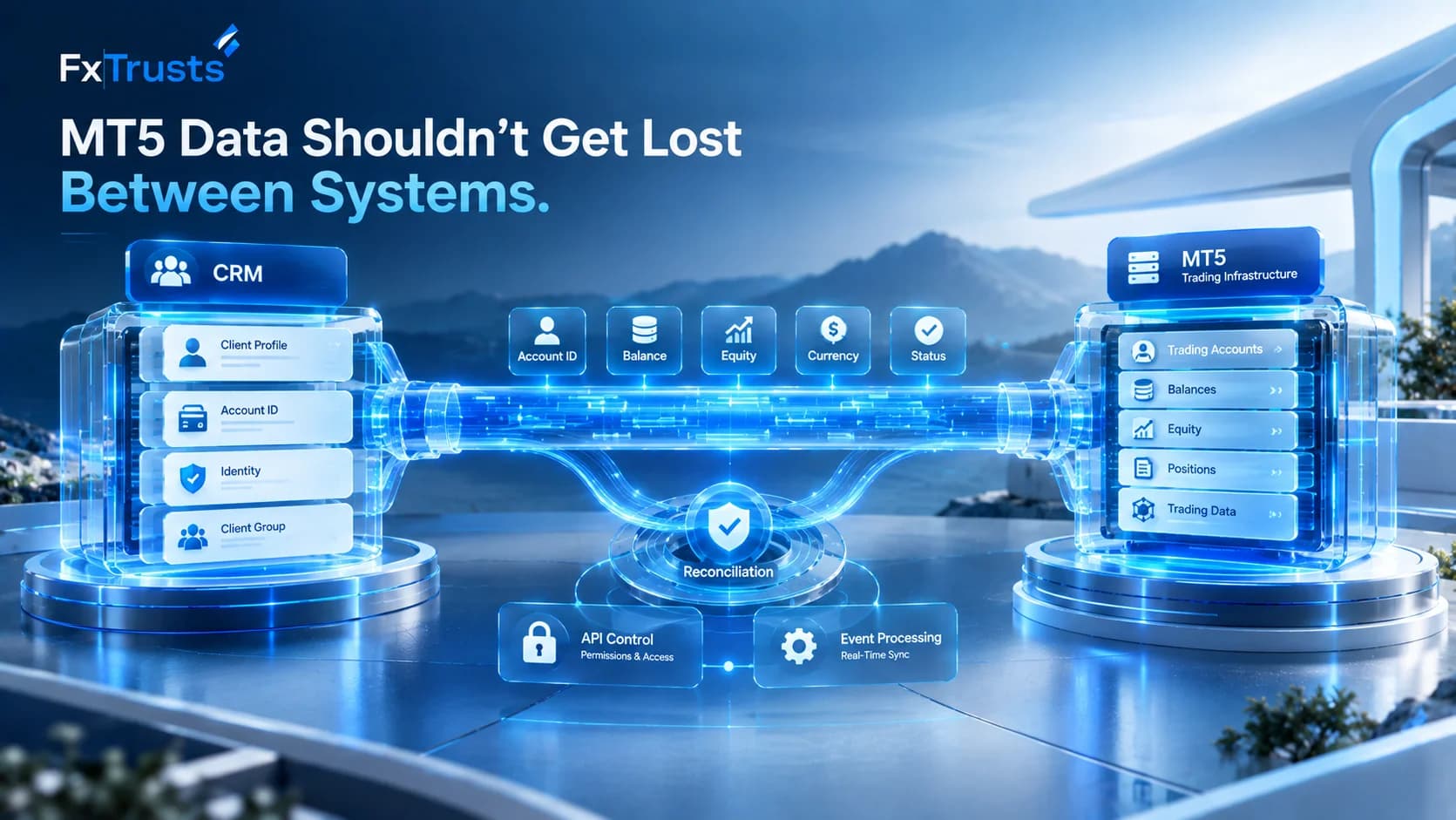
Seamless connectivity with MetaTrader 4 and MetaTrader 5 stands as a non-negotiable requirement. Good forex CRM software syncs account creation, group assignments, leverage settings, balance updates, and trade data in real time via APIs.
This means:
- When a client completes KYC in the CRM, their MT5 account activates automatically.
- Balance changes from deposits reflect instantly in both systems.
- Managers view live positions and risk exposure without switching platforms.
Support for cTrader and other platforms extends versatility for multi-asset brokers.
Compliance and Risk Management Capabilities
Regulatory demands continue to tighten worldwide. Effective systems automate KYC/AML checks, monitor for suspicious activity, generate reports for authorities, and enforce internal risk rules (e.g., leverage limits by jurisdiction).
Features like audit logs, user permissions, and automated alerts help maintain trustworthiness and avoid penalties.
Client Acquisition and Retention Tools
Beyond basics, advanced CRMs offer segmentation, behavioral analytics, and automated campaigns. Identify high-value clients, re-engage inactive ones, and provide tailored education or promotions. Retention improves when clients feel supported through intuitive portals and responsive service.
Back-Office and Reporting Functions
Managers gain dashboards showing key metrics: client acquisition cost, lifetime value, conversion rates, revenue by IB, and operational bottlenecks. Custom reports support decision-making for marketing, risk, and expansion.
Choosing the Right Forex CRM Software
Evaluate based on:
- Depth of trading platform integrations
- Compliance tool robustness
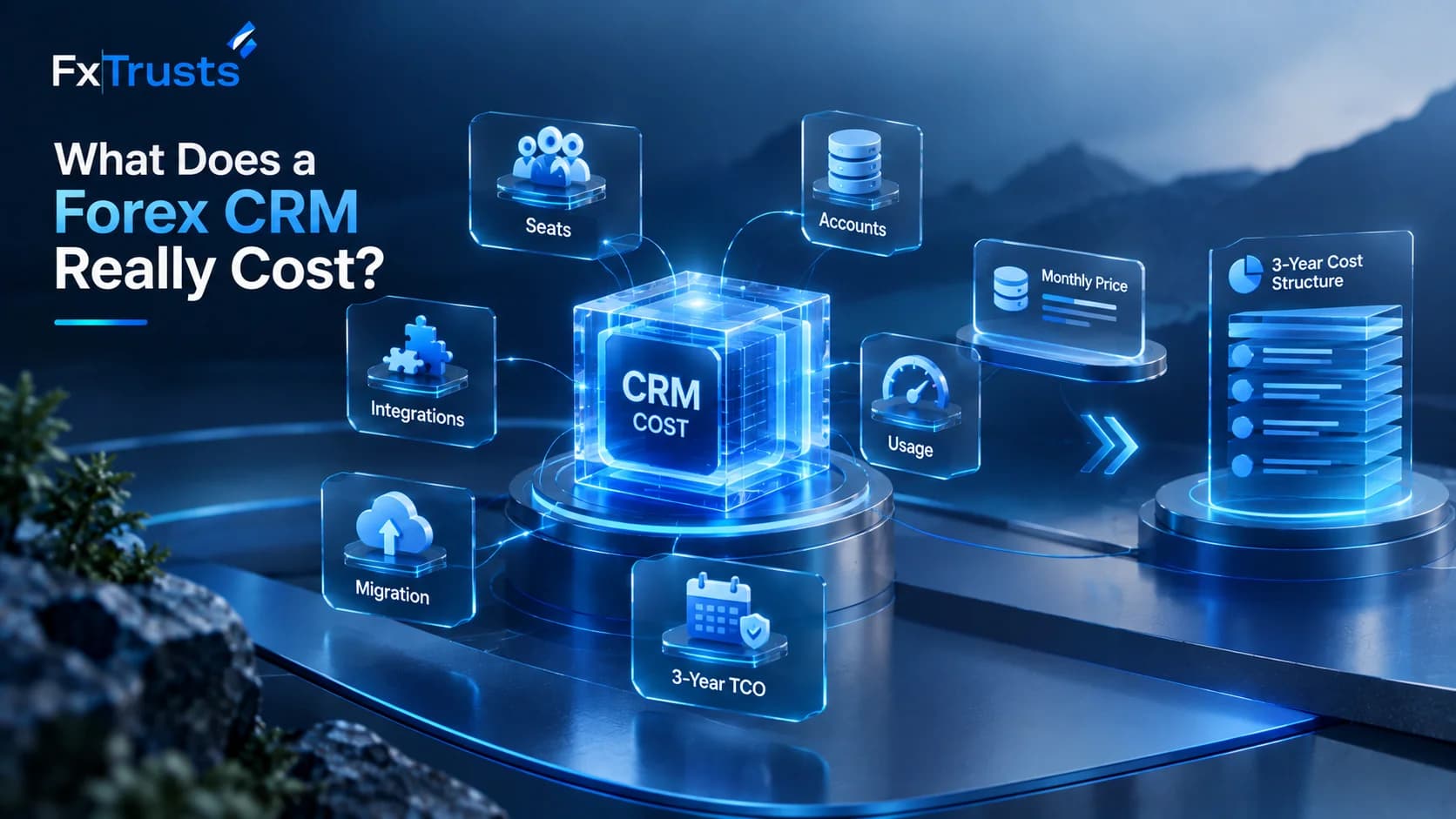
- Scalability and pricing model (subscription, per user, revenue share)
- Support quality and implementation timeline
- Customization flexibility
Startups may prefer cloud-based white-label options for speed, while established firms might need deeper customization. Test demos thoroughly with your team.
Comparison Table: Key Evaluation Criteria
| Criteria | Must-Have | Nice-to-Have |
|---|---|---|
| MT4/MT5 Integration | Real-time bidirectional | Advanced risk sync |
| KYC/AML | Automated workflows | AI document analysis |
| IB Management | Multi-tier commissions | Performance analytics |
| Reporting | Custom dashboards | Predictive insights |
| Security | Encryption, audit logs | SSO, advanced MFA |
Implementation Best Practices
- Map current processes and identify pain points.
- Involve stakeholders from sales, compliance, and tech early.
- Start with core modules (onboarding, client management) before expanding.
- Plan data migration carefully with testing.
- Train staff thoroughly and monitor adoption.
- Establish KPIs to measure ROI (e.g., onboarding time, retention rate).
Common Challenges and How to Avoid Them
- Data Silos: Choose platforms with strong API capabilities.
- Over-Customization: Begin simple and iterate.
- User Resistance: Demonstrate benefits with real examples.
- Compliance Gaps: Prioritize providers experienced in your regulatory jurisdictions.
- Scalability Issues: Verify cloud architecture handles peak loads.
Expert Tips
- Prioritize real-time data over batch updates for better decision-making.
- Use automation for repetitive tasks but keep human oversight for high-risk decisions.
- Regularly review analytics to refine client segments and campaigns.
- Consider future needs like multi-asset support or prop firm modules when selecting.
Industry Insight: Brokers using integrated CRM and trading systems often see 20-40% improvements in operational efficiency, though exact results depend on implementation and team adoption.
Key Takeaways
- Forex CRM software centralizes and automates critical brokerage functions.
- Strong integration with MT4/MT5 and robust compliance tools are essential.
- Focus on scalability, usability, and measurable outcomes.
- Proper implementation delivers competitive advantage through efficiency and client experience.
Conclusion
Selecting and implementing the right forex CRM software transforms how brokers operate—from reactive management to proactive growth. By addressing client lifecycle, compliance, and partnerships in one platform, firms reduce costs, minimize risks, and build stronger trader relationships.
Take time to assess your specific needs, test options, and plan a phased rollout. The investment in a capable system typically pays dividends through smoother operations and sustained business expansion.
FAQ
Q1: What is forex CRM software exactly?
Forex CRM software is a tailored platform that helps brokers manage client relationships, automate operations, and integrate with trading platforms like MT4 and MT5. It handles leads, onboarding, KYC, payments, IB commissions, and reporting in one place, unlike generic CRMs.
Q2: How does forex CRM differ from regular CRM?
It includes deep integrations with trading servers for real-time account and trade data, specialized compliance modules for financial regulations, IB/affiliate tools, and trader self-service portals. Generic CRMs lack these brokerage-specific connections.
Q3: Is MT5 integration important in forex CRM?
Yes. Native integration enables automatic account creation, real-time balance and trade syncing, and seamless client experience. Without it, manual work increases errors and delays.
Q4: What are the main benefits of using forex CRM software?
Faster onboarding, automated compliance, better client retention, accurate commission payouts, operational cost savings, and data-driven decisions through analytics.
Q5: How much does forex CRM software cost?
Pricing varies widely—some use subscription models, others revenue-share or one-time licenses plus maintenance. Factors include users, features, and customization. Request demos for accurate quotes.
Q6: Can small prop firms benefit from forex CRM?
Absolutely. It streamlines client challenges, payouts, and risk monitoring while scaling efficiently as the business grows.
Q7: What compliance features should I look for?
Automated KYC/AML verification, audit trails, risk scoring, jurisdictional rule enforcement, and reporting tools for regulators.
Q8: How long does implementation typically take?
For standard cloud solutions, 2-8 weeks depending on customization and data migration. Thorough testing is essential.
Q9: How can forex CRM improve client retention?
Through personalized communications, easy self-service, performance insights, timely support, and targeted re-engagement campaigns based on behavior.
Q10: How does IB management work in forex CRM?
It tracks referrals, calculates multi-tier commissions in real-time, provides partner portals, and automates payouts based on predefined rules.
Q11: What trends are shaping forex CRM in 2026?
Greater AI automation, enhanced multi-asset support, deeper analytics, improved mobile experiences, and tighter integration across the entire tech stack.
Q12: How do I migrate from one forex CRM to another?
Plan data export/import, test in staging, minimize downtime, and retrain staff. Work with the new provider for support.