Copy Trading Regulations by Region: 2026 Guide

Copy Trading Regulations by Region: A Global Guide for Forex Brokers in 2026
Copy trading has become an important part of the online trading industry. It allows clients to follow experienced traders and replicate their trading activity through manual or automated execution. For forex brokers, CFD providers, and trading technology businesses, it offers opportunities to expand their services and improve client engagement.
However, copy trading is not governed by one universal regulatory framework. Its legal classification depends on the financial instruments involved, the execution model, the role of the service provider, and the jurisdiction in which the service is offered.
A platform that provides trading signals may be treated differently from one that automatically executes transactions on behalf of clients. Understanding these differences is essential for brokers planning to introduce copy trading in 2026.
This guide explores selected regulatory frameworks and the technology considerations brokers should review before launching a copy trading service.
This article provides general educational information and is not legal or regulatory advice.
Understanding Copy Trading Regulations
Copy trading allows investors to replicate another trader's activity. Depending on the platform, transactions may be copied automatically, approved individually, or shared as signals.
Regulators may consider several factors when assessing these services:
Whether transactions are executed automatically or manually approved.
Whether the provider exercises investment discretion.
Whether the instruments involve forex, CFDs, securities, derivatives, or crypto-assets.
Whether the service includes investment advice or order transmission.
How copied traders and strategy providers are compensated.
Whether clients receive appropriate risk and cost disclosures.
Therefore, the term "copy trading" alone does not determine whether a service requires regulatory authorisation. The actual business model must be assessed.
Copy Trading Regulations in Europe
In the European Union, copy trading involving financial instruments may fall under the Markets in Financial Instruments Directive II (MiFID II), depending on the activities performed.
In March 2023, the European Securities and Markets Authority (ESMA) published its Supervisory Briefing on Copy Trading. It addresses service classification, client information, marketing, costs, product governance, suitability and appropriateness, remuneration, and copied traders' qualifications.
Where a provider automatically executes another trader's transactions without further client intervention, portfolio management requirements may become relevant.
Copy Trading and Crypto-Assets
ESMA's April 2025 Q&A clarified that copy trading is not expressly defined as a standalone crypto-asset service under the Markets in Crypto-Assets Regulation (MiCA). Providers must assess which specific crypto-asset service they perform.
Brokers should therefore assess forex, securities, and crypto-asset copy trading separately rather than assuming identical regulatory treatment.
Sources: ESMA Copy Trading Guidance | ESMA MiCA Q&A
Copy Trading Regulations in the United Kingdom
The Financial Conduct Authority (FCA) explains that automatic execution of another trader's signals without further manual input from the client may constitute portfolio management.
Allowing clients to set investment amounts or maximum loss limits does not necessarily change this classification.
Where clients approve every transaction individually, the activity may be classified differently, although other regulated services could still be relevant.
Forex brokers should assess their execution model, client involvement, and responsibilities before offering copy trading to UK clients.
Source: FCA – Copy Trading
Copy Trading Regulations in the UAE
The UAE has multiple financial regulatory jurisdictions. The Capital Market Authority (CMA), formerly the Securities and Commodities Authority (SCA), regulates relevant mainland financial activities. The Dubai Financial Services Authority (DFSA) and Financial Services Regulatory Authority (FSRA) have separate frameworks for DIFC and ADGM.
The UAE CMA rulebook includes a provision for dealing through copy trading systems under specified portfolio management conditions. These include requirements relating to professional clients or counterparties, written agreements, risk disclosures, remuneration, recordkeeping, and operational responsibilities.
This provision should not be interpreted as blanket permission for every broker or client category. Firms must identify the relevant jurisdiction and applicable rulebook before launching.
Source: UAE CMA Rulebook
Copy Trading Regulations in Australia
In Australia, financial services activities are regulated by the Australian Securities and Investments Commission (ASIC).
Depending on the business model, providing financial product advice, dealing in financial products, or performing other regulated activities may require an Australian Financial Services (AFS) licence or appropriate authorisation.
ASIC's 2026 supervisory priorities identify copy trading as an area where licensing and compliance arrangements require further clarification. ASIC has indicated plans to consult on its proposed approach. This should not be confused with a completed new licensing rule.
Brokers should review current ASIC requirements and obtain professional advice before offering copy trading services in Australia.
Sources: ASIC Supervisory Priorities | ASIC AFS Licensing
Copy Trading Regulations in Brazil
Brazil's Comissão de Valores Mobiliários (CVM) issued Circular Letter CVM/SIN 3/2025 concerning copy trading in the financial and capital markets.
The guidance addresses professional securities analyst accreditation, remuneration, risk transparency, and the operating structure of copy trading services.
The CVM's official announcement also states that the copy trading operations covered by its guidance should take place exclusively in a simulated environment.
This guidance must be interpreted within its specific regulatory context. It should not automatically be applied to every forex, CFD, offshore, or other trading arrangement.
Businesses targeting Brazilian clients should obtain local legal advice before offering the service.
Sources: CVM Official Announcement | CVM Circular Letter 3/2025
Why Cross-Border Copy Trading Requires Careful Planning
A broker may be incorporated in one country while accepting clients from several others. However, registration in one jurisdiction does not automatically authorise every financial service in other markets.
Cross-border operations can involve local licensing, financial promotions, client onboarding, product restrictions, and third-party responsibilities.
IOSCO has also examined online imitative trading practices, including copy trading, mirror trading, and social trading, highlighting the cross-border nature of these services.
Brokers should therefore assess each target market independently rather than relying on a single global disclaimer or offshore registration.
Source: IOSCO – Online Imitative Trading Practices
Technology Requirements for a Copy Trading Platform
Regulatory planning should be supported by suitable technology infrastructure. A copy trading platform may require trading terminals, account allocation systems, client portals, execution connectivity, payment workflows, and reporting tools.
PAMM, MAM and Copy Trading
A broker may need allocation rules, trade replication, investor dashboards, strategy profiles, and account-level settings.
FxTrusts provides PAMM, MAM and Copy Trading solutions for brokerages evaluating managed-account and strategy-following workflows.
Trading Platform Integration
The trading platform determines how accounts are managed and how trading instructions are processed. Brokers can evaluate a White Label Trading Platform or the RTX5 White Label Platform, depending on their technology requirements and provider arrangements.
Forex CRM and Trader's Room
A connected Forex CRM and Trader's Room can support client onboarding, KYC workflows, account management, deposits, withdrawals, IB operations, and reporting.
Risk Management and Prop Firm Technology
Allocation limits, drawdown settings, equity protection, and account-level restrictions can support operational monitoring.
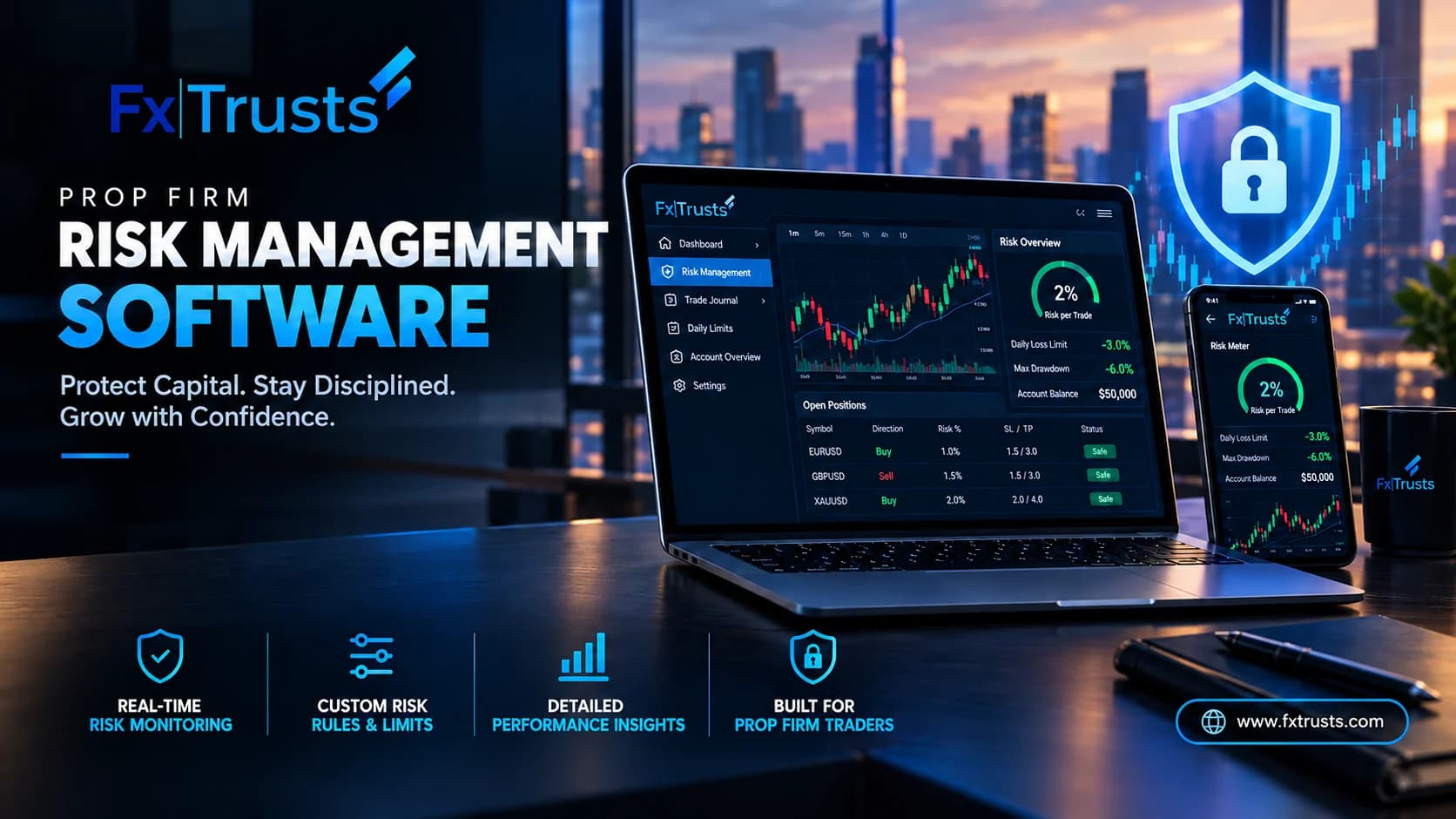
For businesses also operating proprietary trading services, Prop Firm Software and Risk Management can support evaluation workflows, trader monitoring, challenge rules, and risk-related operations.
Liquidity and FIX Connectivity
Order routing, execution reporting, symbol mapping, and provider connectivity are important parts of automated trading infrastructure.
Brokers can evaluate a Forex Liquidity Bridge and FIX Trading API according to their execution and integration requirements.
Payment Infrastructure
Deposit, withdrawal, wallet, and reconciliation workflows may also be required.
Broker Payment Infrastructure can support payment connections and funding operations, subject to provider approval and applicable requirements.
Hosting and Technical Infrastructure
Automated trading systems require appropriate hosting, monitoring, and technical support.
Brokers can explore Forex Broker Hosting and Infrastructure and Hosted Trading Platform Access based on their deployment requirements.
Licensing and Compliance Support
Before entering a new market, firms should review their legal structure, regulatory permissions, client classification, and KYC/AML responsibilities.
FxTrusts also offers Forex Licensing and Compliance Support for licensing-readiness coordination and related business requirements. This does not replace independent legal advice or regulatory authorisation.
How Brokers Can Prepare Before Launching Copy Trading
Before launching a service, brokers should:
Define whether the platform provides signals, manual approval, automatic execution, or discretionary management.
Identify the financial instruments and target jurisdictions.
Establish the responsibilities of the broker, copied trader, platform operator, and technology providers.
Review licensing and authorisation requirements with qualified professionals.
Prepare clear client disclosures covering costs, risks, execution, and conflicts of interest.
Test account allocation, trade execution, risk controls, reporting, and system-failure procedures.
Review marketing claims to avoid guaranteed-return statements or misleading performance representations.
A structured review can help identify regulatory and operational issues before the service is launched.
How FxTrusts Supports Broker Technology Infrastructure
FxTrusts provides technology and implementation services for forex and CFD brokers and proprietary trading firms.
Its solutions cover PAMM, MAM and Copy Trading, Forex CRM and Trader's Room, White Label Trading Platforms, and the RTX5 White Label Platform.
Additional infrastructure includes Prop Firm Software, Liquidity Connectivity, FIX Trading API, Payment Infrastructure, and Forex Broker Hosting.
Businesses can also evaluate Hosted Platform Access and Licensing and Compliance Support according to their operational requirements.
The final technology configuration depends on platform compatibility, provider permissions, contractual scope, and the broker's business model.
FxTrusts provides technology and implementation services. Its software and integrations should not be interpreted as regulatory approval, legal advice, or confirmation that a particular business model is authorised in a specific jurisdiction.
Explore the complete range of FxTrusts products and services.
Conclusion
Copy trading regulations vary across jurisdictions, and the applicable requirements depend on the instruments, execution model, client involvement, and activities performed by each service provider.
The EU, UK, UAE, Australia, and Brazil have different regulatory frameworks and guidance. Brokers should review each target market independently, obtain qualified legal advice, and establish suitable operational controls before launching a copy trading service.
Technology can support trade replication, account management, reporting, and risk monitoring, but it cannot replace regulatory permissions or professional compliance advice.
Important Disclaimer
This article is provided for general educational and informational purposes only. It does not constitute legal, regulatory, financial, investment, or tax advice.
Regulatory requirements may change and may apply differently depending on the jurisdiction, financial instruments, entities involved, client category, and service model. References to regulatory authorities and guidance do not constitute approval or authorisation of any business, platform, or service.
FxTrusts provides technology and implementation services. Mention of its products does not guarantee regulatory compliance or authorisation.
Businesses should independently verify current requirements with the relevant regulatory authorities and obtain jurisdiction-specific professional advice before launching, marketing, or providing copy trading services.
Frequently Asked Questions
Is copy trading legal in every country?
There is no universal answer. Its legal treatment depends on the jurisdiction, financial instruments, and service model. Local regulatory requirements should be reviewed before launch.
Does automatic copy trading require a licence?
It may. The FCA, for example, explains that automatic execution without further manual client input can constitute portfolio management in relevant circumstances.
Is copy trading regulated under MiFID II?
Copy trading involving financial instruments may fall under MiFID II when the activities constitute an investment service. ESMA provides guidance on relevant classification and conduct requirements.
What does the FCA say about copy trading?
The FCA states that automatic execution of another trader's signals may constitute portfolio management. Manual approval of individual transactions can lead to a different classification.
What are Brazil's copy trading requirements?
CVM Circular Letter 3/2025 addresses analyst accreditation, remuneration, risk transparency, and simulated-environment operations for the services covered by its guidance.
Are copy trading services allowed in the UAE?
The answer depends on the regulator, client category, financial products, and operating model. CMA, DFSA, and FSRA requirements should be assessed separately.
What is the difference between PAMM, MAM, and copy trading?
PAMM generally uses pooled or proportional allocation, MAM allocates trading activity across individual accounts, and copy trading replicates another trader's activity according to platform settings. Exact functionality depends on implementation.
Does a trade copier make a broker compliant?
No. A trade copier provides technology for replicating trades. It does not establish regulatory authorisation or replace legal and compliance obligations.