Prop Firm Payout Automation: Operational Guide | FxTrusts
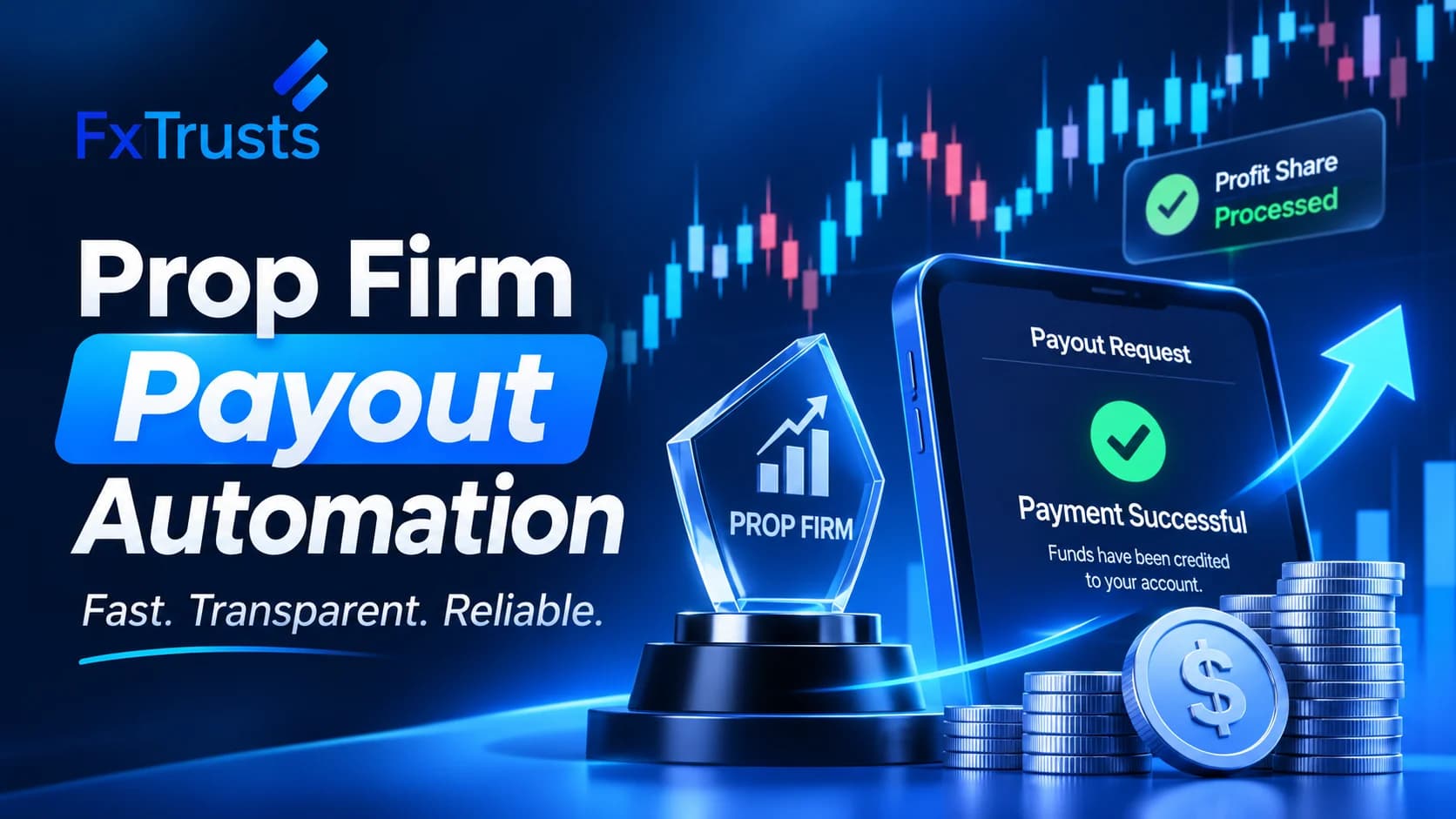
Prop firm payout automation uses structured software rules to calculate profit splits, generate invoices, and run compliance checks. Speed matters. While payout workflow automation guides outline scalable approval controls, investigative reporting on payout denials shows that unclear eligibility criteria and manual disputes still create operational friction for operators.
Prop firm payout automation: definition and decision context?
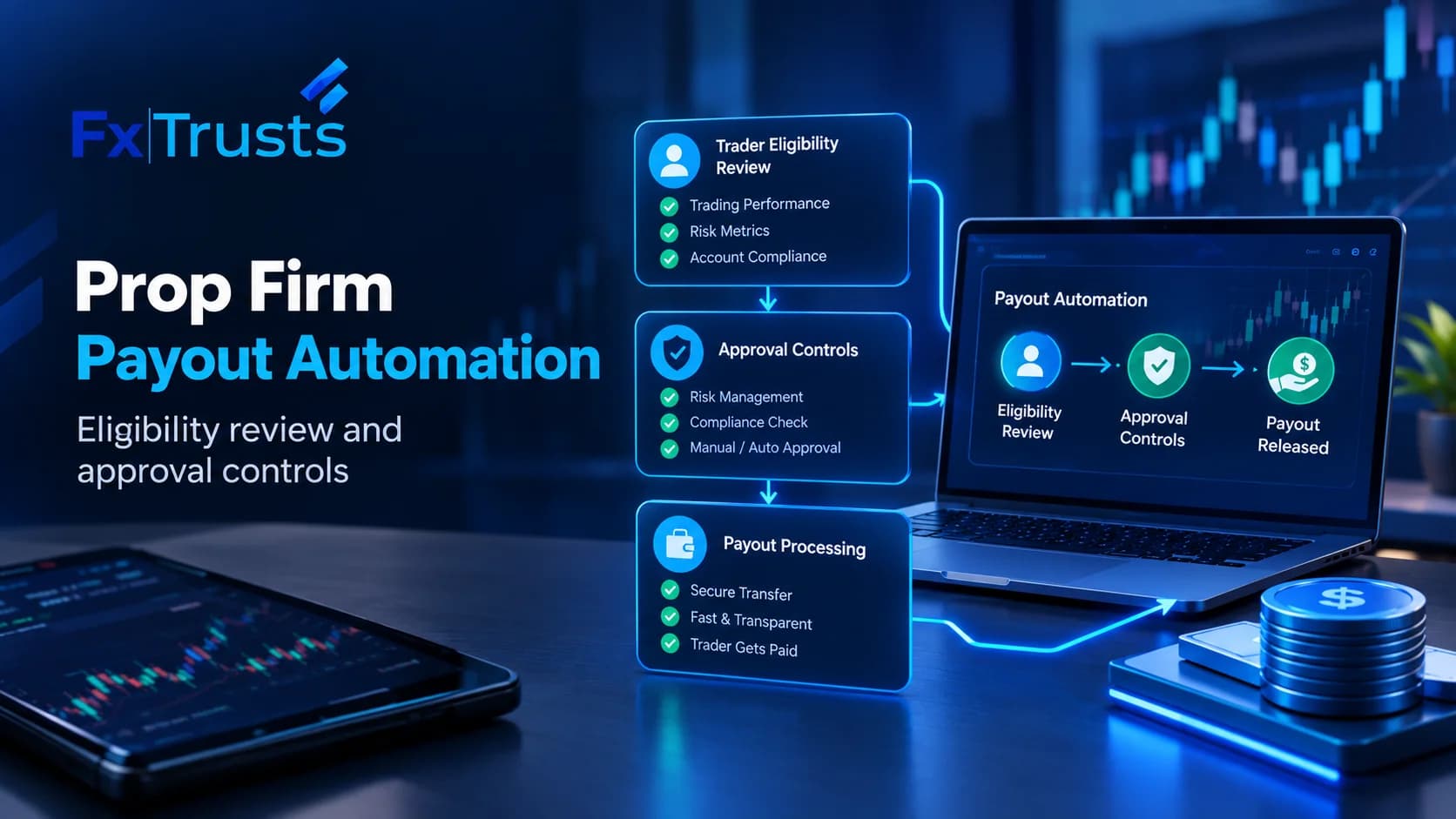
Prop firm payout automation is the use of back-office software rules to verify eligibility, calculate profit splits, generate invoices, and trigger withdrawals without manual spreadsheet reconciliation. For brokerage and prop-firm founders, automating disbursement workflows reduces administrative bottlenecks while enforcing consistent rulebook checks before funds leave the treasury.
The operational need for reliable withdrawal governance has grown alongside heightened scrutiny of how firms handle trader requests. In May 2026, industry investigators cataloged more than 28 investigative articles examining payout denials, questionable rule interpretations, and operational breakdowns across retail prop firms. Parallel coverage from payout rulebook intelligence reports and industry market reports highlights how inconsistent manual reviews erode participant confidence. Notice that these investigative series document disputed cases rather than providing an audited failure rate across all firms.
At the infrastructure level, building a dependable payout pipeline starts inside your core account-management and CRM layer. When trading platforms, client portals, and KYC/AML databases operate in disconnected silos, finance teams must manually reconcile closed trades, drawdown thresholds, and identity status before approving every request. Connecting those components through a unified Platform overview architecture gives operators a single audit trail from evaluation pass to funded withdrawal. Integrating automated Licensing & compliance gates ensures that every payout decision follows documented, repeatable logic rather than ad-hoc discretion.
Who should consider prop firm payout automation?
Growing prop-firm operators handling recurring withdrawal queues and funded traders running systematic strategies both interact with automated payout frameworks, though their operational goals differ. Operators adopt back-office automation to enforce consistent accounting and compliance gates at scale, whereas systematic traders structure their withdrawal timing around published firm rules.
Industry analysis published in January 2026 notes that a payout structure automation strategy can involve automated trading systems designed to manage profit withdrawals from funded accounts while remaining within compliance boundaries. Reporting from prop firm analysis coverage frames this approach around matching withdrawal requests to rulebook constraints rather than bypassing them. That distinction matters because trader-side automation cannot override an operator's risk controls, and published summaries do not establish uniform profitability or guaranteed approval across firms.
From a B2B technology perspective, teams launching a new prop brand alongside an existing brokerage often need shared infrastructure across both entities. Evaluating Forex white label setups early helps founders decide whether evaluation accounts, funded stages, and live brokerage books should share one CRM and ledger. Once daily withdrawal volume outgrows manual ticket review, automated calculation engines and queued treasury approvals become essential. Small pilot programs with low request counts can still start with semi-automated checks, provided every rule and compliance threshold is codified before scaling.
Benefits and practical limitations
Automating disbursement workflows delivers faster internal reconciliation and standardized compliance screening, yet software rules cannot resolve ambiguous rulebooks or eliminate manual review for edge cases. Operators gain efficiency only when automated triggers reflect unambiguous contract terms, accurate ledger feeds, and clearly defined escalation paths.
A March 2026 guide on automating prop payouts highlights core workflow components including profit splits, invoices, and compliance checks alongside structured operational controls. Complementary industry research summaries emphasize that scalable back-office workflows depend on connecting those financial calculations directly to account verification and audit logs. Still, these operational frameworks describe implementation design principles rather than audited cost savings or universal processing benchmarks for every firm.
| Operational Dimension | Manual Payout Review | Automated Payout Workflow |
|---|---|---|
| Profit-Split Calculation | Finance staff calculate splits and balance adjustments manually per ticket. | Rule engines compute splits and generate standardized payout invoices from ledger data. |
| Compliance Screening | Ad-hoc verification of KYC status, rule breaches, and trading logs. | Pre-configured automated compliance checks flag exceptions before approval. |
| Scalability Under Volume | Queue backlogs grow linearly as funded account numbers expand. | Back-office queues handle routine requests while routing anomalies to staff. |
| Operational Limitations | High human error risk and inconsistent rule interpretation. | Requires precise rule definitions; edge cases still need human review. |
Strengths and Limitations of Payout Automation
- Pro — Consistent split and invoice generation: Software applies uniform profit-split formulas and creates verifiable invoices based on back-office workflow controls.
- Pro — Integrated compliance checkpoints: Automated rules check identity verification and account rules before queuing settlement in scalable payout systems.
- Pro — Reduced manual reconciliation errors: Direct ledger integration minimizes spreadsheet copy-paste mistakes across multi-tier funded accounts.
- Con — Ambiguous rules cause false flags: If risk parameters or prohibited strategy definitions are vague, automation either blocks valid requests or requires frequent overrides.
- Con — Exception handling remains manual: Suspected rule violations, payment-provider holds, and identity mismatches still demand trained compliance reviewers.
- Con — Payment rail bottlenecks persist: Internal approval speed does not remove external banking, card, or third-party settlement delays.
Selecting purpose-built Prop firm software allows operators to balance automated approvals with configurable manual-review thresholds for high-value or flagged accounts. Pairing that logic with redundant Payment infrastructure helps prevent single-gateway outages from stalling approved withdrawals.
A book prop firm and the reader decision
Evaluating an A-Book prop firm model requires examining how trade execution, liquidity routing, and treasury funding interact with automated payout obligations. Unlike purely simulated or internalized risk models, routing funded-account flow to external liquidity changes how profits are realized and reconciled before withdrawals are settled.
Independent research hubs tracking global retail prop trading compile detailed firm dossiers and estimates to help market participants compare operating structures. Additional evidence-based industry research underscores that understanding a firm's underlying business model and dossier details is critical when assessing payout sustainability. Because modelled industry estimates vary by methodology, operators and traders should treat third-party dossiers as comparative context rather than audited financial statements.
For brokerage founders designing an A-Book prop-firm stack, automated payout logic must reconcile against external liquidity statements rather than internal demo balances alone. If a firm hedges or routes funded trader positions through liquidity bridges, settlement timing between the prime or liquidity counterparty and the firm's treasury account affects available cash flow. Operators running managed allocation programs alongside prop accounts—such as PAMM/MAM copy trading—must also keep fee calculations, master-account splits, and prop withdrawal rules cleanly separated in the CRM ledger. Clear technical documentation and API docs make it easier for engineering teams to verify ledger balances against liquidity reports before triggering automated disbursements.
5 prop firm and the reader decision
Comparing five prop firms—or five competing back-office payout setups—demands measurable withdrawal evidence broken down by firm structure and payment rail rather than marketing claims. Examining actual disbursement patterns across a five-firm shortlist reveals where operational friction occurs and which payment methods settle reliably.
In October 2026, an industry study examined more than 600 withdrawal records from CERTS-verified prop firms to measure how long traders actually wait across different firm types and payment methods. Cross-referenced reporting from payout speed data studies confirms that settlement duration varies depending on both organizational model and the chosen payout channel. Readers should note that a sample of verified records reflects the participating firms and time window studied, so results cannot be generalized blindly to unverified operators.
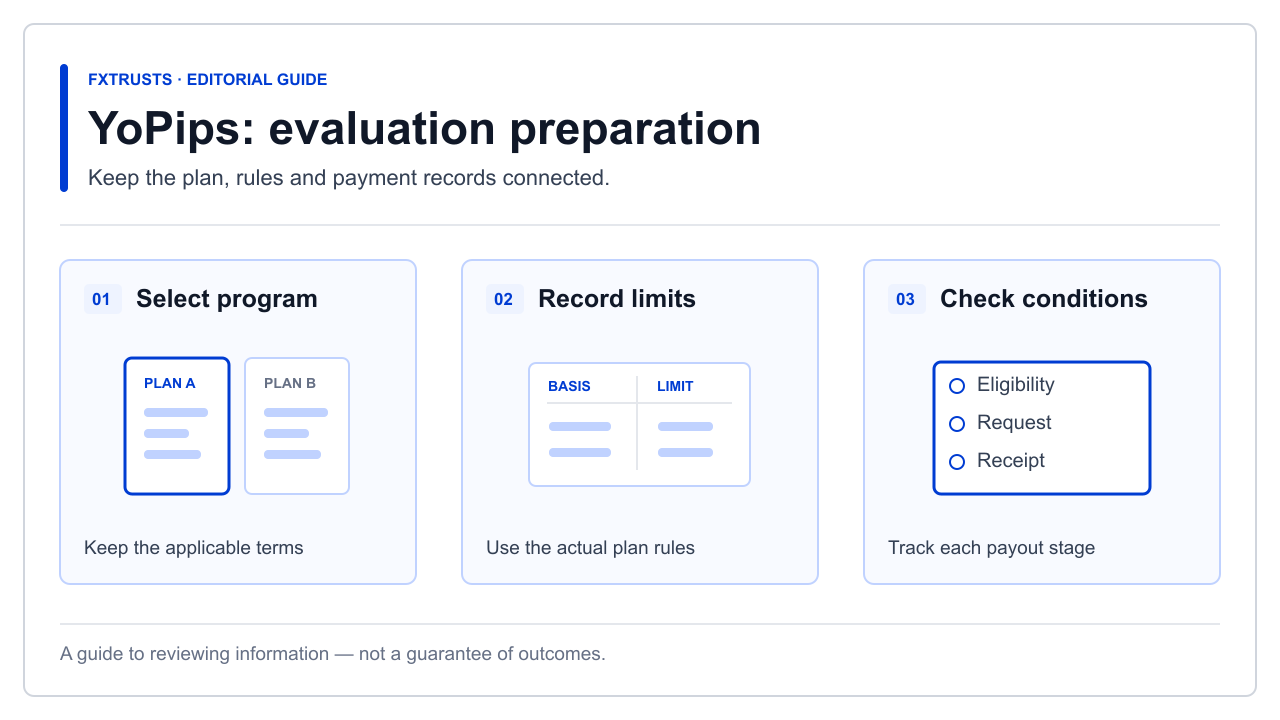
When a founder benchmarks five prop firm architectures or a trader compares five funded programs, structured evaluation criteria prevent costly surprises. First, check whether payout eligibility rules—such as minimum trading days, consistency thresholds, and prohibited execution patterns—are codified transparently in the rulebook. Second, verify which payment rails are supported across target geographies and how automated reconciliation handles failed transfers or compliance holds. Third, confirm whether automated approval workflows separate routine eligibility checks from discretionary risk reviews so applicants know what triggers a manual hold.
Conclusion
Automated payout workflows help prop firms replace ad-hoc ticket handling with repeatable profit-split math, standardized invoicing, and consistent compliance gates. When configured carefully, these systems reduce administrative lag for operators and create clearer expectations for funded traders.
Automation still has practical boundaries that technology alone cannot solve. Ambiguous rulebooks, edge-case compliance flags, and external payment-rail delays require clear governance, documented escalation paths, and qualified human oversight. Before selecting software or launching a payout workflow, founders should map their execution model, treasury reconciliation process, and regional compliance obligations with qualified legal counsel. Teams ready to review unified CRM, compliance, and disbursement tooling can Get started with an operational architecture review.