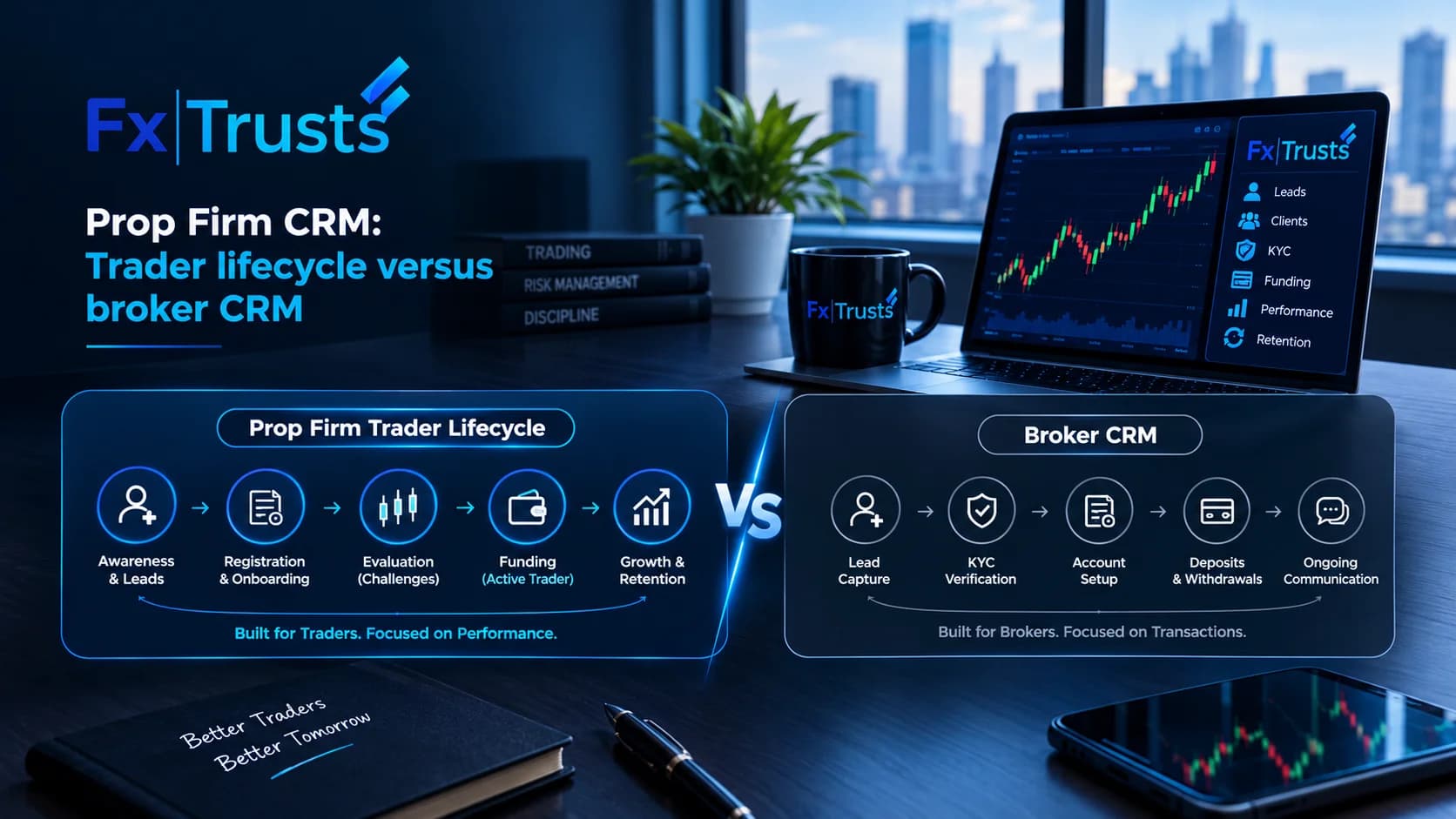
Prop firm challenge software: plan and stage configuration

Prop firm challenge software: plan and stage configuration should turn commercial rules into testable workflows, permissions, and operational controls. Start with the participant journey, then document each stage, exception, approval, and integration before choosing a stack. The configuration is only a starting point; legal, compliance, and operational review remain necessary.
Prop firm challenge software: plan and stage configuration
Prop firm challenge software: plan and stage configuration is the process of translating a firm’s participant journey into structured stages, rules, permissions, and operational handoffs. It is less about filling fields in an administrative panel and more about making the operating model explicit.
A useful plan begins with the intended journey. Describe what a participant sees before registration, what information is collected, how access is granted, how progress is assessed, and what happens when a rule requires review. That description should be understandable to operations, compliance, support, and technology teams.
The configuration should also distinguish policy from implementation. A policy explains the decision the business wants to make. The implementation explains how software records the relevant event, applies a rule, routes an exception, and presents the outcome. Keeping those layers separate makes later changes easier to evaluate.
Teams can use the Platform overview as a starting point for mapping the wider technology context. The purpose is not to assume that one product or workflow fits every model, but to identify the decisions that must be made before technical setup begins.
Who should consider prop firm challenge software: plan and stage configuration?
Operators should consider a structured configuration approach when a challenge model has more than one participant path, stage, approval route, or operational dependency. It can also help teams that are moving from informal procedures to documented workflows.
The approach is relevant to founders defining an initial operating model, established teams changing their participant journey, and technology leads coordinating a platform with customer support, payments, identity checks, reporting, or trading infrastructure. The common need is clarity: people should know which system owns each decision and which team handles an exception.
Smaller teams may be tempted to keep every rule in a shared document or message thread. That can be useful during discovery, but it is not a substitute for a controlled configuration once participants, staff, and connected services rely on the process. A written plan gives reviewers something concrete to challenge before launch.
Teams should avoid choosing software solely because it presents many configuration fields. The relevant question is whether the system can represent the firm’s intended process clearly enough for testing, support, audit preparation, and controlled change. The Prop firm software page can help frame that wider stack discussion.
Benefits and practical limitations
A staged configuration can make responsibilities easier to discuss. Instead of reviewing an abstract platform, a team can walk through registration, eligibility, stage entry, rule evaluation, progression, exception handling, and closure. This sequence creates a shared language for product, operations, compliance, and support.
Another benefit is controlled change. If a rule, message, permission, or integration is changed in isolation, the effect may be difficult to see. A documented stage plan encourages the team to ask which participant paths, records, notifications, and internal procedures are affected before a change is released.
The limitation is that software configuration cannot resolve an unclear business model. It cannot decide whether a rule is appropriate, whether a disclosure is adequate, or whether a proposed operation is suitable for a particular jurisdiction. Those questions require the relevant business owners and qualified professional advisers.
There is also a testing burden. A normal path is not enough. The plan should include incomplete registration, rejected information, duplicate records, payment interruption, manual review, rule disputes, account closure, and a request to correct an earlier decision. These are operational scenarios, not promises about participant outcomes.
A balanced review should therefore examine both convenience and control. The Licensing and compliance resource is a relevant internal reference for keeping regulatory questions separate from configuration assumptions.
Suitable forex crm for prop firms & their decision
A suitable CRM decision starts with the firm’s operating questions, not a generic feature checklist. The team should identify which participant records must be created, which statuses need to be visible, which staff roles require access, and which events should create a task or notification.
For a new operation, simplicity may matter more than breadth. A narrow first release can be easier to test if its ownership, data flows, and exception routes are clear. The plan should still record future requirements, so the initial setup does not quietly become a constraint that staff must work around.
For a growing operation, the emphasis may shift toward consistency across teams. Support, payments, compliance, and operations may each need a different view of the same participant journey. That makes permissions, data definitions, handoffs, and escalation paths central to the decision.
Integration questions deserve their own review. If a CRM connects with a platform, payment service, identity workflow, or reporting layer, document the direction of data movement and the response when a connection fails. A system that looks complete in a demonstration may still require careful operational ownership.
Readers comparing options can use the Forex white label resource as adjacent context, while keeping the CRM decision tied to their own process, jurisdictional review, and support model.
Suitable crm for established prop firms
Established teams should evaluate configuration against the process they already operate, including the parts that are currently handled outside the main system. This means documenting spreadsheets, manual approvals, support macros, payment checks, internal messages, and reports that staff depend on.
The goal is not to automate every activity immediately. First, identify which activities require a reliable record, which require a human decision, and which can safely be routed through a repeatable workflow. That distinction helps prevent automation from hiding an unresolved policy question.
Change control becomes especially important when several teams use the same environment. A proposed edit should have an owner, a reason, a test path, and a rollback or correction plan. Staff should also know how a participant-facing explanation will be updated when the underlying process changes.
Established firms may also need to examine historical data and continuity. Before changing a status model or stage rule, decide how earlier records will be interpreted and who will answer questions about them. The technical migration is only one part of the transition; communication and support are part of the operating design.
Where the model includes managed allocation or related functionality, the PAMM/MAM copy trading resource provides a separate area for discussion. It should not be treated as evidence that a particular configuration is appropriate for every firm.
Conclusion
Prop firm challenge software should be planned as an operating workflow rather than a collection of isolated settings. Define the participant journey, separate policy from implementation, assign ownership, and test ordinary and exceptional paths before launch.
The strongest decision process is deliberately practical. It asks what information is needed, which system owns each event, who can change a rule, how staff handle exceptions, and how participants receive clear explanations. It also records the limits of the software so that business, legal, compliance, and operational decisions are not hidden inside configuration.
Teams can begin with a simple process map and then validate the proposed stack against it. Useful next steps may include reviewing the Get started path, consulting the API docs when integration is relevant, and involving qualified legal and compliance professionals before launch or material change.
This article does not establish licensing suitability, participant eligibility, or a required technology architecture. Those decisions depend on the firm’s model, controls, counterparties, data practices, and applicable requirements. Treat the configuration plan as a working document that must be reviewed as the operation develops.