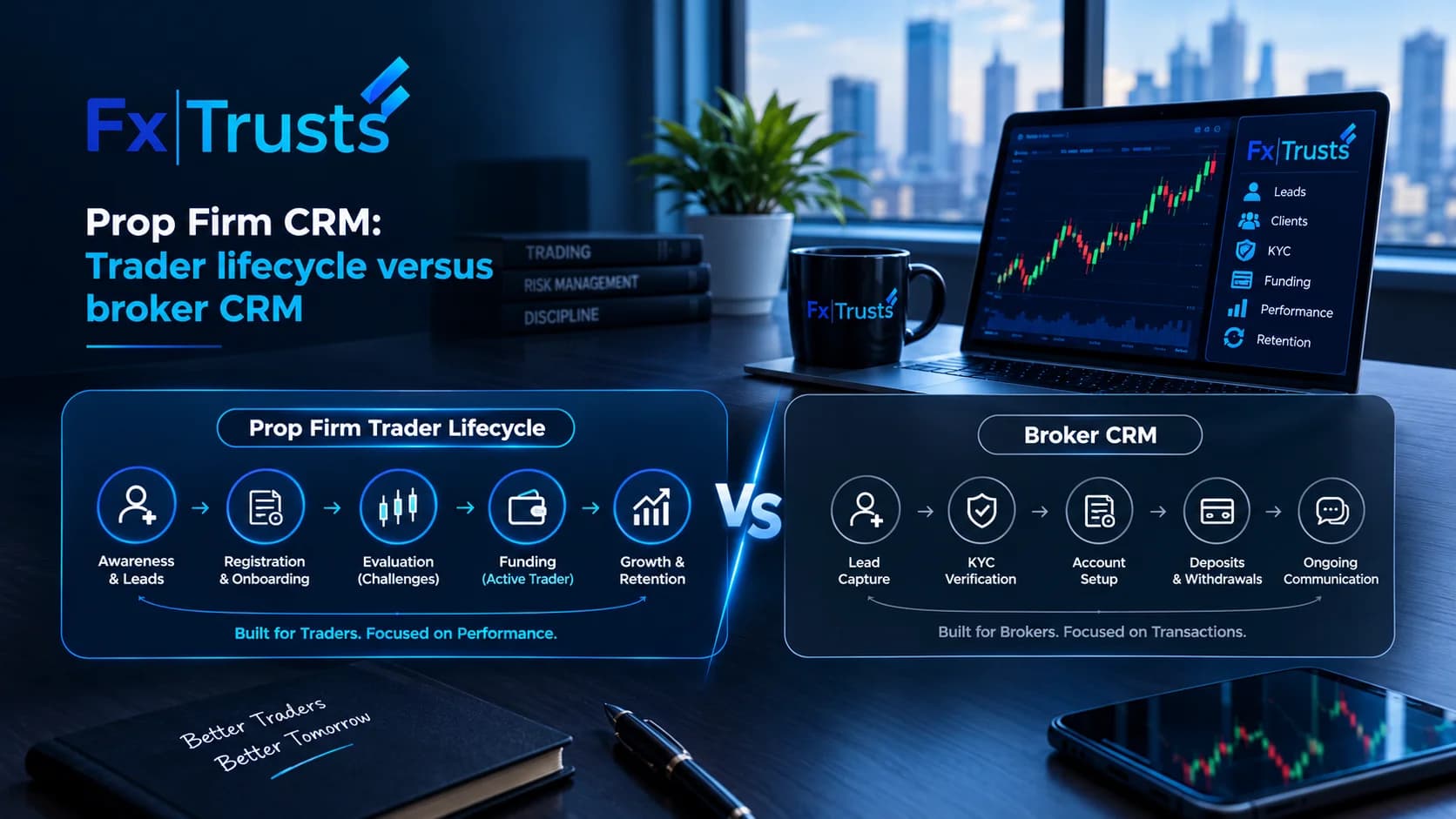
Prop firm startup cost: software payment and support budgets
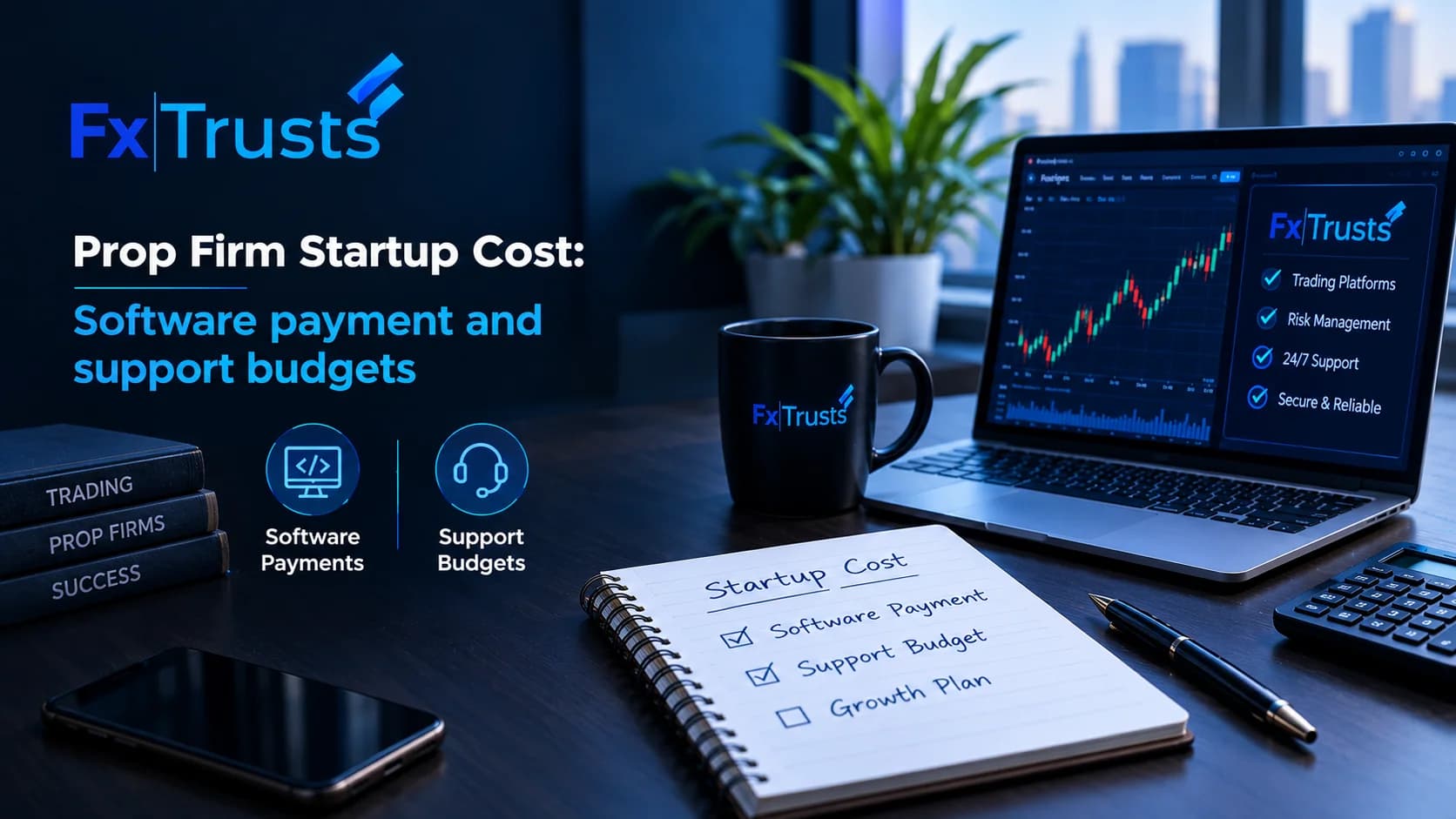
Prop firm startup cost: software payment and support budgets should be planned as separate operating workstreams rather than one headline figure. Start with scope. Map each system, payment dependency, support responsibility, compliance task, and contingency before requesting quotes, because no approved prices or benchmarks were supplied.
Prop firm startup cost: software payment and support budgets: definition and decision context?
Prop firm startup cost: software payment and support budgets is a planning framework for identifying what must be funded, who owns each task, and which dependencies could change the launch scope. It should begin with an operating model rather than a vendor total. A useful first pass separates the trader-facing journey, internal administration, payment operations, support coverage, compliance work, integrations, and contingency. The purpose is not to predict an exact figure without quotes; it is to make future quotes comparable.
Start by writing down the intended customer journey from registration through account use and support. Then list the systems and teams involved at every handoff. This exercise exposes decisions that a single package label may hide, such as whether an integration is included, whether an internal team must configure it, and whether a separate provider is expected to resolve exceptions. The Platform overview can be used as a first-party reference point when defining categories, not as independent evidence of market pricing.
Keep three columns beside each budget line: required for launch, deferrable until later, and conditional on the operating model. Add an owner, an approval point, and a question that must be answered before commitment. That structure helps prevent different teams from using the same label for different scopes. It also makes omissions visible before a commercial proposal is treated as complete. Without approved price evidence, the defensible output is a scoped checklist and request-for-quotation brief, not a public cost estimate.
Who should consider prop firm startup cost: software payment and support budgets?
This framework is most useful for founders and operating teams that have not yet aligned their launch scope, vendor responsibilities, and internal staffing assumptions. It also helps teams replacing part of an existing stack, because a lower-level change can affect onboarding, payments, support, reporting, or integrations. The decision is less about company size than about complexity, ownership, and how many separate parties must coordinate before and after launch.
A founder-led project may need a simple responsibility map so commercial discussions do not outrun operational preparation. A more distributed team may need a formal matrix showing which party configures, tests, approves, monitors, and supports each component. In both cases, the budget should reflect work as well as software. Teams exploring a packaged route can review the Forex white label page as first-party service information while keeping independent validation and quotation review separate.
The framework is also relevant when the launch concept is still changing. If the target markets, payment routes, account rules, support hours, or integration requirements remain unsettled, a single total can create false precision. Use ranges only after obtaining supported proposals, and record what each proposal excludes. A practical decision gate asks whether the planned scope is sufficiently stable for comparison. If it is not, invest effort in requirements and operating design before treating any commercial estimate as a dependable budget.
Benefits and practical limitations
The main benefit of a separated budget is decision clarity; the main limitation is that categories do not supply reliable prices by themselves. A workstream view can reveal missing ownership, duplicated tooling, and dependencies that require clarification. It cannot replace vendor proposals, legal review, compliance analysis, technical testing, or an internal assessment of staffing capacity. Treat it as a preparation method that improves questions rather than an answer that settles every cost.
Potential benefits
- Creates a consistent scope for comparing proposals.
- Separates launch requirements from optional additions.
- Makes internal work and vendor work easier to distinguish.
- Highlights dependencies among technology, payments, support, and compliance.
Practical limitations
- Does not establish market prices without approved quotations or evidence.
- Cannot determine legal or licensing obligations for a jurisdiction.
- May miss operational work if ownership interviews are incomplete.
- Requires revision when the operating model or launch scope changes.
A safeguard is to require a written assumption beside every material line. For software, describe the intended workflow and integration boundary. For payments, describe the proposed route, reconciliation ownership, and exception process. For support, distinguish implementation help from continuing operational coverage. For compliance, ask qualified professionals to define the applicable work rather than relying on a technology checklist. The Prop firm software page may help frame first-party product questions, but it should not substitute for due diligence.
Another limitation is bundling. A bundled proposal can be easier to read while still leaving responsibility gaps, whereas a modular proposal can look fragmented while giving the buyer more explicit control. Neither structure is inherently preferable without context. Compare both against the same requirement list and acceptance criteria. Record who handles failures, changes, and out-of-hours issues. The planning value comes from exposing trade-offs before commitment, not from steering every operator toward the same commercial model.
Prop firm crm and the reader decision
A prop firm CRM decision should be framed around workflows, ownership, controls, and integration boundaries rather than a feature-count contest. Begin with the actions that internal teams need to complete and the information they need at each stage. Then determine which tasks belong in the CRM, which remain in connected systems, and which require human approval. This approach keeps the selection tied to the operating model instead of turning a broad product label into an assumed solution.
Map the user lifecycle as a set of states and exceptions. For each state, ask what triggers a change, who can approve it, what record must be retained, and which connected system needs the outcome. Avoid assuming that two tools using similar terminology will handle the same workflow or data ownership. If allocation or managed-account functionality is within scope, the PAMM/MAM copy trading page can inform first-party discovery questions without establishing suitability for a specific operation.
Budget review should distinguish implementation from continuing administration. Implementation questions include configuration, migration, integration, permissions, testing, and team preparation. Continuing questions include workflow changes, user management, exception handling, reporting needs, and escalation. These are planning categories, not claims that a particular product includes each item. Ask every provider to mark each requirement as included, configurable, custom, third-party, or out of scope, then require the internal owner to confirm that the answer matches the intended process.
Compliance-related workflows need special caution. A CRM can organize tasks and records, but technology selection does not decide what a jurisdiction requires or whether an operating model is acceptable. Use the Licensing & compliance page only as first-party information about available services. Obtain qualified legal and compliance guidance for the intended jurisdictions, customer profile, products, and operating structure before converting a checklist into a launch plan.
Suitable forex crm for prop firms and the reader decision
A suitable forex CRM for prop firms is one whose scope, controls, integration model, and support arrangement match the documented operation. Suitability cannot be established from a generic feature list alone. The reader’s task is to convert broad needs into testable scenarios, assign owners to those scenarios, and compare provider responses on the same basis. Where evidence and quotations are absent, avoid turning preference into a factual product recommendation.
Create scenarios for ordinary flows and exceptions. Examples may include an incomplete onboarding case, a payment that requires review, a user requesting assistance, a rule-driven account change, or a data mismatch between systems. These are testing prompts rather than claims about any specific platform. For each scenario, define the expected handoff, decision owner, record, notification, and recovery path. A demonstration becomes more useful when the provider must show the workflow rather than confirm that a named feature exists.
Payment planning deserves its own review because commercial acceptance, technical integration, reconciliation, support, and exception ownership may involve different parties. Do not select a gateway from a generic label or unsupported ranking. Compare the available routes against the proposed customer journey and operating constraints, then seek direct provider documentation and professional advice where relevant. The Payment infrastructure page describes FxTrusts’ first-party offering and should be evaluated as vendor information.
Integration questions should be written for both business and technical readers. The business owner should define the desired outcome and fallback process. The technical owner should examine authentication, permissions, data mapping, error handling, testing, monitoring, and change management as applicable to the proposed design. These are evaluation topics, not confirmed capabilities. Teams reviewing a prospective integration can consult the API docs for first-party technical information and validate the exact requirements during due diligence.
Conclusion
The defensible next step is to build a scoped budget model before seeking a single launch total. Separate software, payments, implementation, continuing support, compliance work, integrations, staffing, and contingency, then attach an owner and assumption to every line. This creates a consistent basis for vendor conversations while making clear where evidence, quotations, or professional advice are still needed. It also reduces the temptation to treat an incomplete package price as a complete operating budget.
Use the model as a living decision record. When the operating design changes, update the affected requirements, responsibilities, and dependencies before comparing revised proposals. Keep vendor statements clearly identified as first-party information, and do not convert unsupported marketing language into public claims. For broader educational material, the Blog provides additional first-party reading, while final decisions should remain tied to documented requirements and appropriate professional review.
Because the supplied research contains no approved cost sources, this article intentionally provides no prices, averages, vendor rankings, or launch benchmarks. A human editor should withhold publication until suitable evidence is attached if the page is expected to answer numeric cost questions. Once that evidence exists, the budget framework can be extended with attributed ranges, clear inclusions, dates, and jurisdictional caveats without changing the underlying operating logic.
Frequently Asked Questions
best crypto gateway for a new prop firm?
No specific crypto gateway can be recommended from the available evidence. Define supported payment journeys, settlement and reconciliation responsibilities, exception handling, integration boundaries, support escalation, and jurisdictional constraints. Then compare direct provider documentation and obtain qualified compliance advice before treating any gateway as suitable for the planned operation.
are there any trading platforms with robust api support for integrating custom analytical tools?
A platform should not be described as having robust API support without approved technical evidence. Evaluate candidates against documented authentication, permissions, data access, testing, monitoring, error handling, rate constraints, and change-management needs. Validate each requirement in current provider documentation and a controlled technical review before committing to an integration design.