How to Start a Forex Brokerage

Starting a forex brokerage in 2026 is no longer a game reserved for banks and hedge funds with eight-figure budgets. Between white-label trading platforms, plug-and-play CRMs, and liquidity providers that onboard startups in weeks, a lean, compliant brokerage can go live for a fraction of what it cost a decade ago. But "cheaper and faster" doesn't mean "simple." Get the licensing, technology stack, or liquidity setup wrong, and you'll burn capital before your first client ever places a trade.
This guide walks through the entire process — from choosing a jurisdiction to opening your doors for live trading — so you know exactly what to budget, what to build, and what to outsource.
What Does It Take to Start a Forex Brokerage?
At a glance, launching a forex brokerage in 2026 requires:
- A registered legal entity and a forex/CFD license appropriate to your target market
- A trading platform (MetaTrader 4/5, cTrader, or a proprietary build)
- A liquidity provider (LP) to source live pricing and execution
- A broker CRM with KYC/AML and IB (introducing broker) management
- A payment service provider (PSP) for deposits and withdrawals
- Risk management and back-office infrastructure
- A funded, compliant launch budget — realistically anywhere from roughly $50,000 for a lean offshore setup to $2 million or more for a fully regulated, onshore brokerage
The sections below break each of these down step by step.
Step 1: Define Your Business Model Before Anything Else
Every downstream decision — license, platform, liquidity, budget — depends on your business model. Decide early:
- A-Book (STP/ECN): You pass client orders straight to liquidity providers and earn from spreads or commissions. Lower risk, lower margin per trade, more scalable long-term.
- B-Book (Market Maker): You take the other side of client trades internally. Higher potential margin, but it requires serious risk management and stronger capital reserves.
- Hybrid model: Most modern brokerages route based on client profitability and trade size — profitable, high-volume traders go A-Book; smaller retail flow may stay B-Book.
Your model also determines your target client base (retail vs. institutional), which in turn shapes which jurisdiction and license actually make sense for you.
Step 2: Choose Your Jurisdiction and Get Licensed
Licensing is the single decision that shapes everything else — your capital requirements, timeline, banking access, and which countries you can legally market to. Broadly, jurisdictions fall into three tiers:
Offshore / Entry-Level Jurisdictions
Examples: St Vincent & the Grenadines, Vanuatu, Seychelles, Belize, Anjouan/Comoros
- Fastest and cheapest route to market, often 3 weeks to 3 months
- Minimal or no paid-up capital requirements in some cases
- Popular with bootstrapped startups and IB-led launches
- Caution: Some offshore jurisdictions (notably SVG since 2023) do not actually license or regulate forex/CFD activity — an SVG company registration is not a financial license. Misrepresenting incorporation as regulation is a serious compliance and marketing risk.
Mid-Tier Regulated Hubs
Examples: Mauritius, Labuan (Malaysia), BVI, Cayman Islands
- Real banking access and moderate credibility
- Minimum capital typically in the $18,000–$50,000+ range depending on jurisdiction
- Timelines of roughly 2–3 months
- A practical middle ground for brokers who've outgrown pure offshore setups but aren't ready for Tier-1 costs
Tier-1 Onshore Regulators
Examples: CySEC (Cyprus/EU), FCA (UK), ASIC (Australia), CFTC/NFA (USA)
- Highest credibility, full EU passporting (CySEC) or top-tier market access
- Capital requirements can range from roughly €125,000 up to several million dollars, with US brokers facing the steepest bar
- Timelines of 6–12+ months, extensive local staffing and reporting obligations
- Necessary if your clients are based in regulated Tier-1 markets — operating there without the matching license is illegal, not just risky
Bottom line: Map your target client geography first, then match the license to it. A brokerage courting EU retail clients needs CySEC-level regulation; one focused on emerging markets in Southeast Asia, Africa, or Latin America can often launch compliantly and profitably from a mid-tier or offshore base.
Step 3: Set Up Your Corporate and Compliance Foundation
Once you know your jurisdiction, build the compliance backbone regulators and banks will expect:
- Local company registration and, where required, a physical office
- Appointment of a Money Laundering Reporting Officer (MLRO)
- KYC/AML policies and onboarding workflows
- Risk disclosure documents, Terms of Use, and a GDPR-compliant Privacy Policy
- Negative balance protection and prudential supervision frameworks for higher-tier regulators
- Cybersecurity measures, including vulnerability assessment and penetration testing (VAPT), now commonly expected as part of licensing in 2026
Most founders hire a licensing consultant or fintech lawyer for this stage — it materially reduces rejection risk and speeds up approval.
Step 4: Choose Your Trading Platform
Your platform is the product your clients actually touch every day. Main options:
- MetaTrader 4/5 (MT4/MT5): The industry standard, with the largest installed base of traders who already know the interface. White-label programs make deployment fast.
- cTrader: A modern, ECN-friendly interface popular with brokers targeting a more sophisticated trading audience.
- Proprietary platform: Maximum branding control and flexibility, but a significantly higher development investment and longer time to market.
For most new brokerages, a white-label MT4/MT5 or cTrader setup is the fastest way to reach launch without sacrificing reliability.
Step 5: Connect to a Liquidity Provider
Without a liquidity provider (LP), you have no live prices and no execution — clients can't actually trade. When evaluating LPs, prioritize:
- Multi-asset coverage: forex, indices, commodities, and crypto, so you can expand your product range without switching providers
- Deep, stable pricing with low latency and minimal slippage
- Bridge technology that connects your platform to the LP's pricing feed reliably
- Reputation and regulatory standing — most reputable LPs will require you to hold a valid license before onboarding you
Many brokers start with a single prime-of-prime LP and diversify to multiple providers as volume grows, both for pricing competitiveness and redundancy.
Step 6: Implement a Broker CRM
A forex-specific CRM is not optional — generic sales CRMs don't handle the trading account, KYC, and partner-commission workflows a brokerage needs. Look for:
- Integrated KYC/AML verification tools
- IB and affiliate management with automated commission tracking
- Multi-level partner hierarchies (sub-IBs, master IBs)
- Client trading account provisioning tied directly to your platform
- Reporting dashboards for compliance and regulatory audits
Launching your IB/affiliate program alongside — not after — your CRM go-live is one of the biggest differentiators between brokers that scale quickly and those that burn cash with an empty funnel.
Step 7: Set Up Payments (PSP Integration)
Deposits and withdrawals are where trust is won or lost. You'll need:
- A licensed Payment Service Provider supporting your target regions' preferred methods (cards, bank transfer, e-wallets, local rails)
- Segregated client fund accounts, required by most regulators
- Fraud monitoring and transaction limits appropriate to your risk profile
- Multi-currency support if you're targeting clients across regions
PSP approval for forex specifically can be harder to secure than for other verticals — many providers treat forex as high-risk, so factor in extra lead time here.
Step 8: Build Your Risk Management Framework
Whether you run A-Book, B-Book, or hybrid, you need:
- Real-time exposure monitoring across your book
- Automated risk limits and margin call/stop-out logic
- A/B-book routing rules if running a hybrid model
- Negative balance protection where regulation requires it
- Regular stress-testing against volatile market conditions
This is where many under-capitalized launches fail — not from lack of clients, but from unmanaged exposure during volatile sessions.
Step 9: Plan Your Launch Budget
Realistic 2026 planning ranges, covering the first 12 months including launch:
| Tier | Approx. Budget | What It Buys |
|---|---|---|
| Lean offshore | ~$50,000–$150,000 | Offshore registration, white-label platform, single LP, basic CRM |
| Mid-tier regulated | ~$150,000–$500,000 | Mauritius/Labuan-style license, stronger CRM/compliance stack, PSP diversity |
| Fully regulated (CySEC/FCA-level) | $500,000–$2,000,000+ | Full local staffing, paid-up capital, multi-LP setup, EU/UK-grade compliance |
Treat regulatory/paid-up capital as funds you must hold and maintain, not spend — it belongs in your funding plan, separate from operating costs like technology, PSP fees, and marketing.
Step 10: Go Live — and Launch Your Partner Program From Day One
Sequence your spend so revenue-generating capability comes online as early as possible: license → platform → liquidity → PSP → CRM → and critically, your IB/affiliate engine, so partners can start referring clients the moment you open. A brokerage with strong infrastructure but no partner program in place at launch is one of the most common — and most avoidable — reasons well-funded startups stall before gaining traction.
Before opening to the public:
- Run a full end-to-end test: onboarding → KYC → deposit → live trade → withdrawal
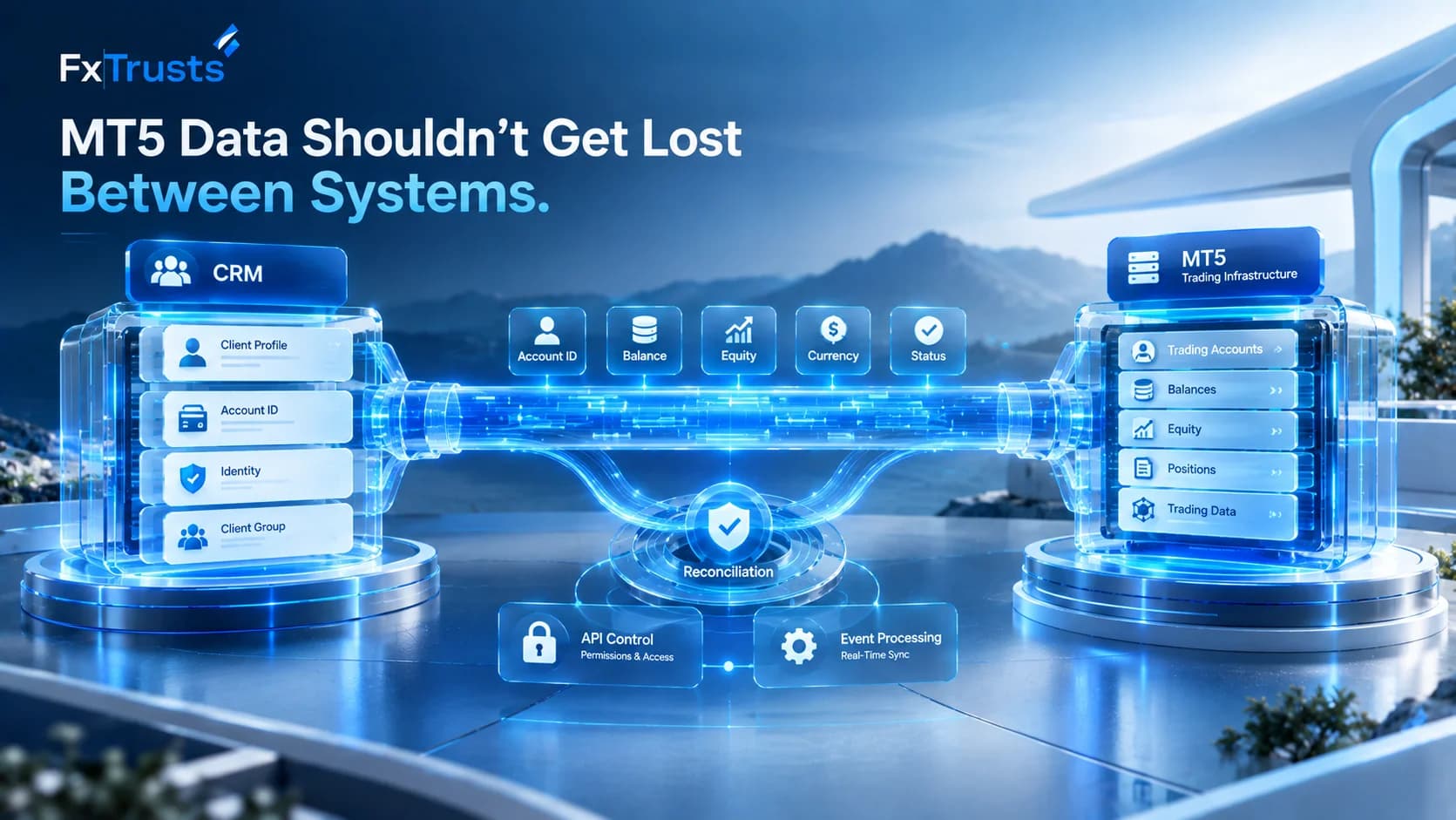
- Confirm your platform, LP, and CRM data sync correctly in real time
- Verify compliance documentation is client-facing and accurate
- Soft-launch with a small group before scaling marketing spend
Final Thoughts
Launching a forex brokerage in 2026 comes down to sequencing: pick a business model that matches your capital, choose a jurisdiction that matches your clients, and build your technology and compliance stack in the order that gets you to your first live trade fastest — without cutting corners that come back to bite you with regulators, banks, or clients. Get those fundamentals right, and the brokerage itself becomes far easier to scale than most first-time founders expect.
If you're mapping out your own launch plan, FXTrusts can help you think through jurisdiction, platform, and liquidity choices that fit your specific target market and budget.